Anatomy of progress* (*regress)
A sensory encounter with the
fragility of our ecosystems
Tata Motors
2023-24
ROLE
Researcher & Multimedia Designer
DURATION
Sept ‘23- present (active consultants)
LOCATION
Pune, India
METHODS
Ethnobiology, Ethnography, Human Behavioural Research, Electronics, Sound Design, Installation Design
About the Project
This project addresses the disconnect between urban life and ecological consciousness, where the impact of our presence remains largely invisible. It aims to make ecological loss tangible through a sensory journey that reveals absence rather than spectacle. The installation unfolds in three stages—from subtle disappearance, to direct impact, to reflective silence—guiding visitors to confront their own environmental footprint. In doing so, it transforms awareness into emotional resonance, deepening our understanding of the ecosystems we unknowingly affect.
Paradox of the site : a "natural" space born form industry
Set within the Tata Lakehouse in Pune—a thriving ecosystem built from industrial waste and intent—this project investigates the tension between natural and artificial environments.
The site’s success as a carbon sink and wildlife habitat challenges conventional definitions of “nature,” prompting the core inquiry: When does nature become unnatural?
Given an open-ended brief to define the experience of a Nature Interpretation Centre, the project evolved beyond spatial design into a reflective exploration of ecological agency, human responsibility, and sensory engagement—shifting the focus from interpreting nature to confronting our role in shaping it
This led to a cascade of fundamental questions that became the starting point for all subsequent research:
How much meaningful control do we have over the direction of human society? Is significant change possible in today's world?
Will the knowledge systems of the past guide us in shaping the future?
Is there a disconnect between understanding and action?
The goal shifted from simply interpreting nature to creating awareness, rekindling a lost affinity, and forcing a confrontation with the choices we make. This foundational stage expanded the research into three core areas: the dichotomy of natural vs. artificial environments, the barriers preventing ecological action, and the crucial role of soundscapes in our well-being.
Journey : ancient rituals to urban silence
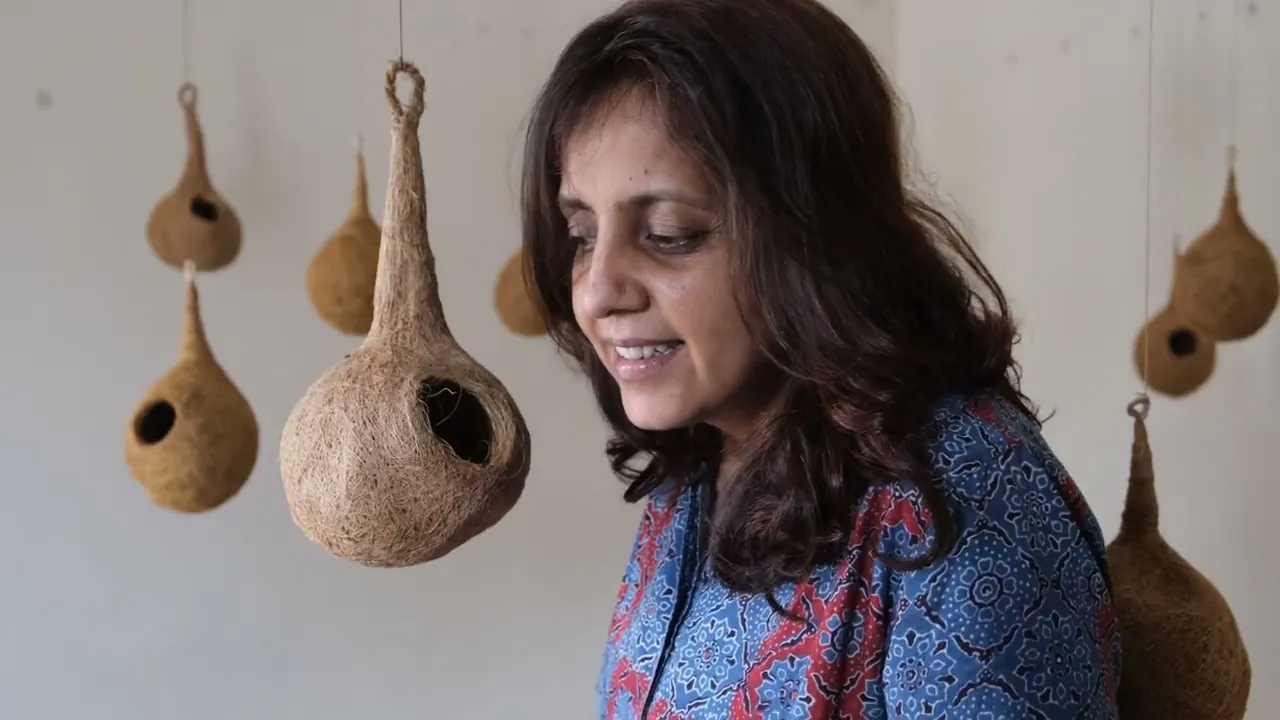
My research was a deep dive into the complex relationship between humans and nature. I discovered that our modern perception of "nature" is often that of a separate, idealised escape—a place we visit, not a system we are part of. This led me down a fascinating, multi-layered path.
Echoes of Ecological Wisdom: I explored how ancient myths, rituals, and cultural practices once encoded deep ecological knowledge. In India, for example, the reverence for trees like the Peepal and Banyan is woven into spiritual beliefs that ensure their protection. These traditions fostered a symbiotic relationship with nature that has frayed over time.
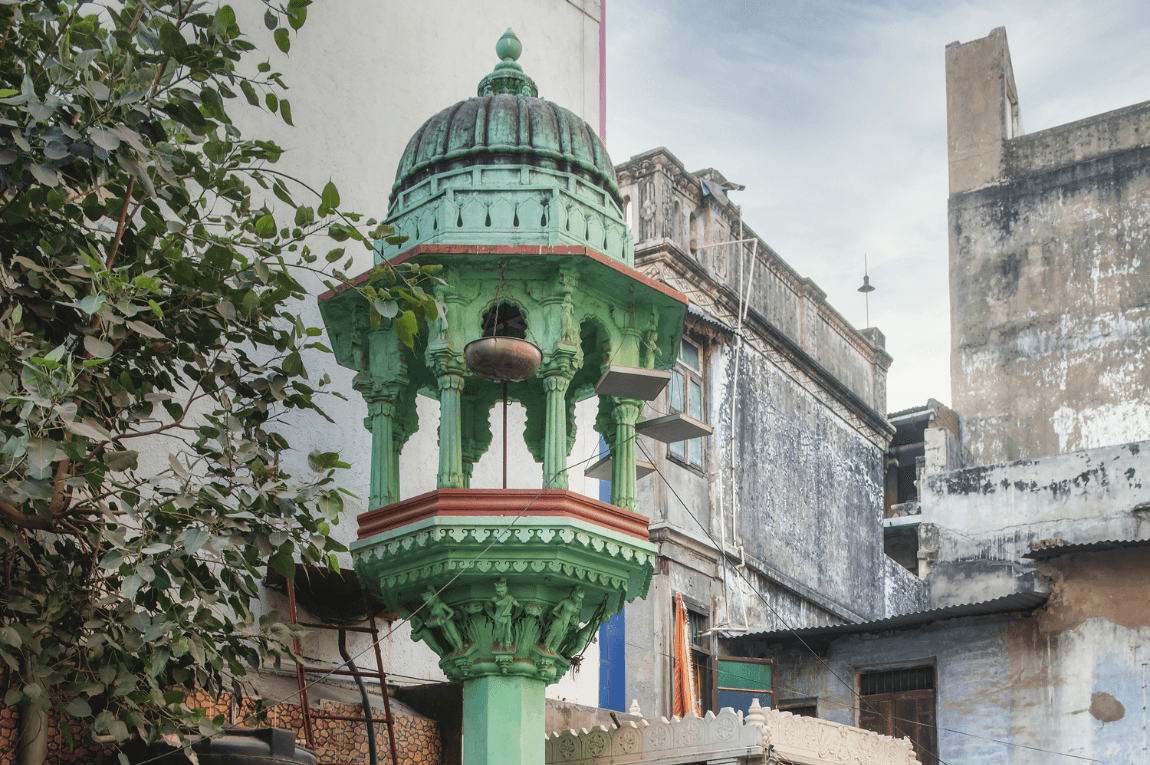
The Case of the Fading Chabutro: The Chabutro, a traditional Indian bird feeder, became a powerful symbol for my research. Historically, it was a vibrant hub where communities gathered, connecting with each other and their local bird life. Today, many stand as neglected relics—a physical manifestation of our growing disengagement from the natural world around us.
The City's Silent Spring: The decline of the Chabutro mirrored a more alarming trend: the transformation of our urban soundscape. The rich chorus of birdsong is being drowned out by the constant hum of traffic and machinery. I was struck by the concept of "urban hostility"—from the noise that disrupts avian communication to hostile architecture like spikes on tree branches designed solely to protect cars from droppings.
Research Highlights
The Human-Nature Divide
We define nature as separate from humans
*creates a false dichotomy.
The Fading Urban Ritual
Case Study: The Chabutro (Bird Feeder); Once a community hub for nature connection, now a neglected relic symbolising our disengagement.
Rediscovering Ecological Wisdom
Studying myths, rituals, and indigenous knowledge
*Sacred groves, Reverence for trees.
The Silent City
Urban soundscapes are dominated by anthropogenic noise. This creates 'Urban Hostility' for avifauna, leading to declining bird populations
Two truths and a new direction
This extensive research coalesced into two core insights that became the foundation of my project:
The Extinction of Experience : We are losing opportunities to interact with nature, especially in cities. This leads to a loss of ecological literacy and, crucially, a loss of empathy.
The Invisibility of Impact : Our small, daily decisions—the products we use, the spaces we build—accumulate to create an environment hostile to wildlife, but these effects are often too slow or subtle for us to perceive directly.
Armed with these insights, I pivoted from an initial, broad proposal for an outdoor experience to a more focused and intimate indoor installation. The goal was no longer just to show nature, but to make the absence of nature a tangible, physical, and unforgettable experience.
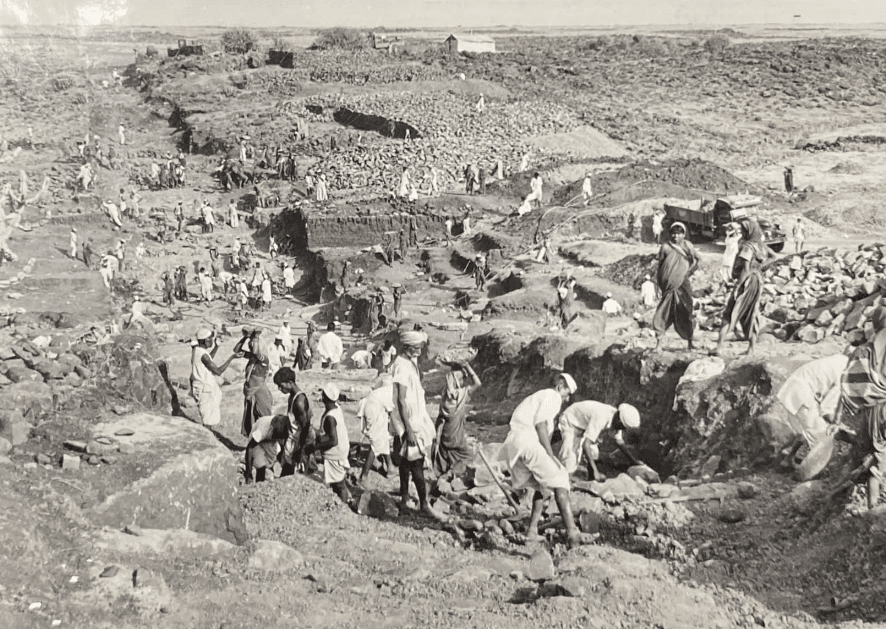
Tata Lakehouse, Pune 1966
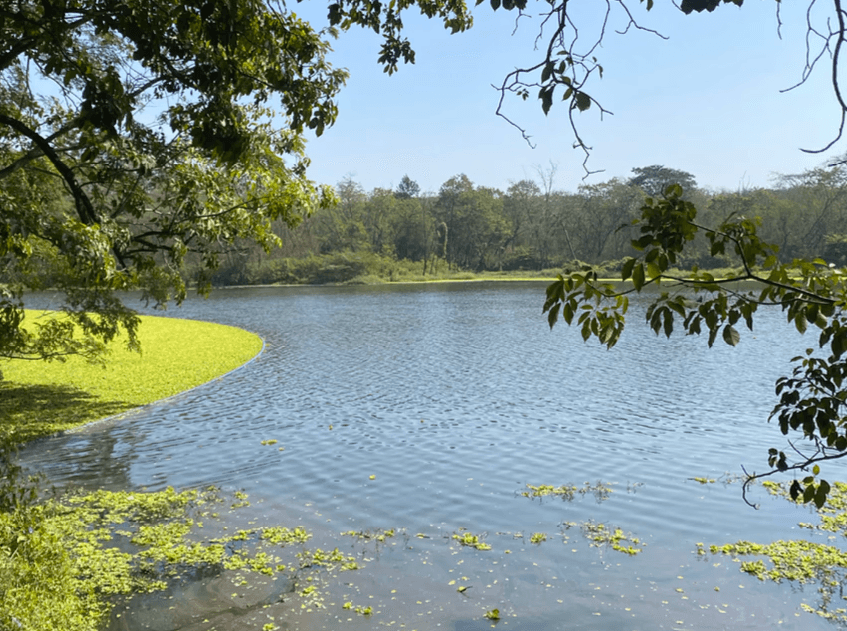
Tata Lakehouse, Pune 2024
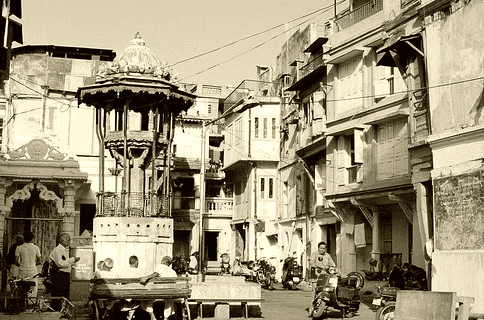
Chabutra/Chabutro in Gujarat, India
The Touchpoints: A Three-Part Immersive Installation
The final outcome is a multi-sensory installation titled "Anatomy of Progress* (*regress)," designed to guide visitors through a narrative of awareness, confrontation, and reflection.
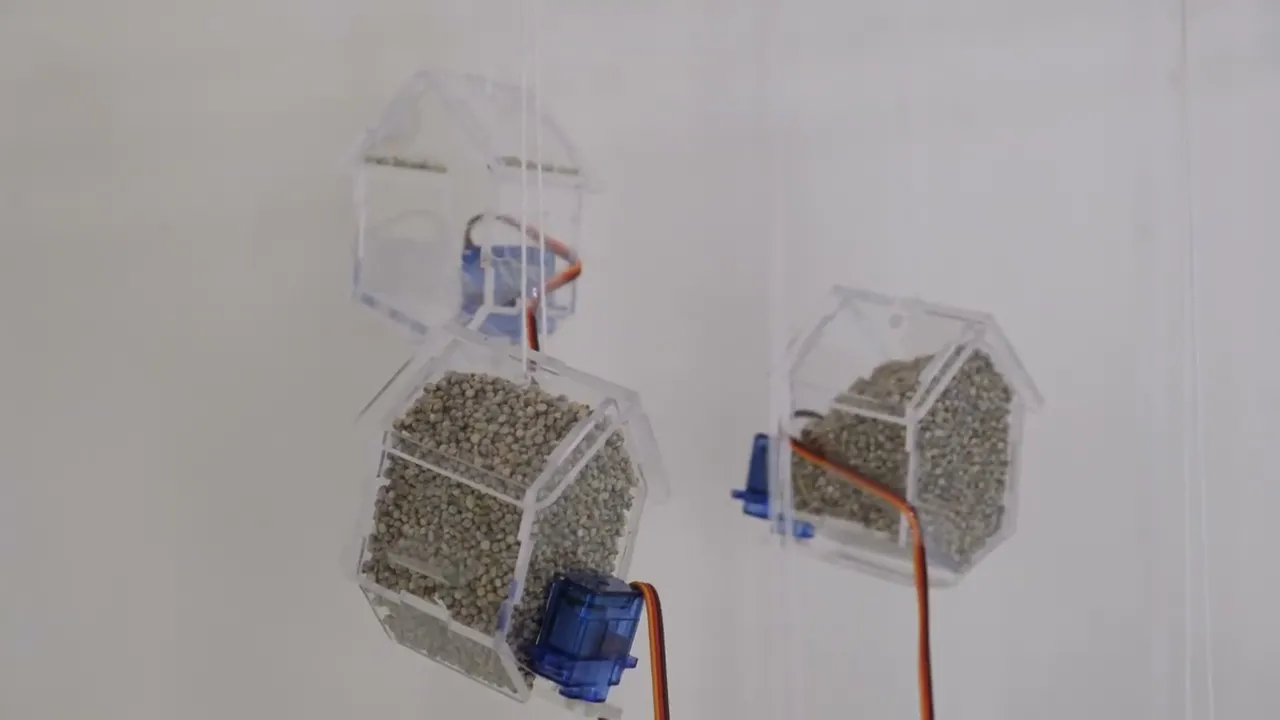
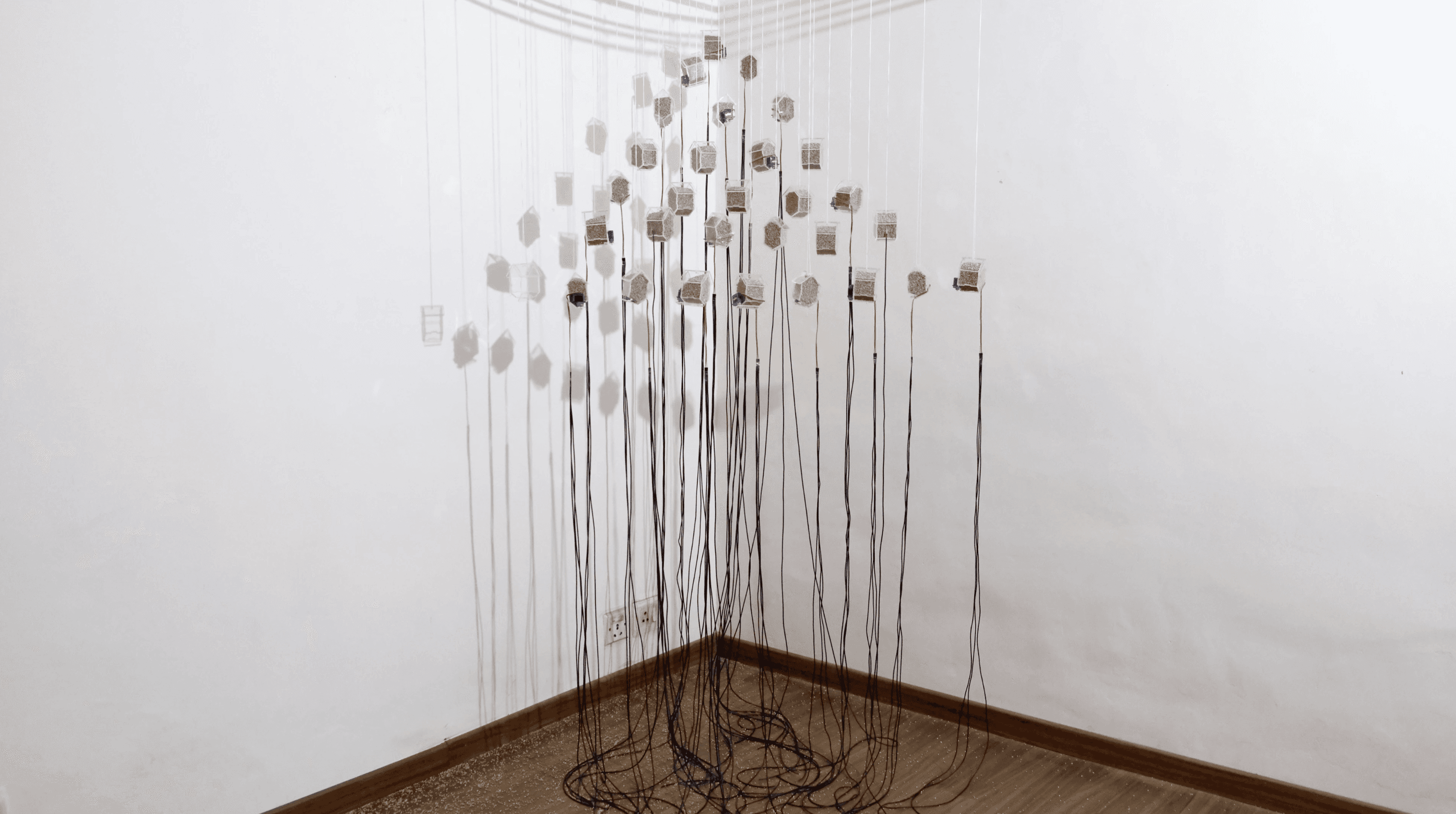
The installation operates on a daily cycle, mimicking the rhythms of nature but with a crucial absence. Each day, one birdhouse empties itself, releasing its grain content in a steady flow.
This action mirrors the familiar sight of birds spreading seeds in urban settings, but with a stark difference – there are no birds present to consume the falling grains. Instead, the grains accumulate on the floor, forming growing piles that serve as visual markers of time and loss.
Unperched (I/III)
This mechanical action transforms the entire installation into a massive, conceptual hourglass. The falling grains not only mark the passage of time but also symbolise the contraction of avian habitats and the declining populations of urban birds.
The rhythmic sound of falling grains creates a haunting auditory landscape, a subtle yet persistent reminder of the growing silence in our cities as bird populations diminish.
Fleeting Wings (II/III)
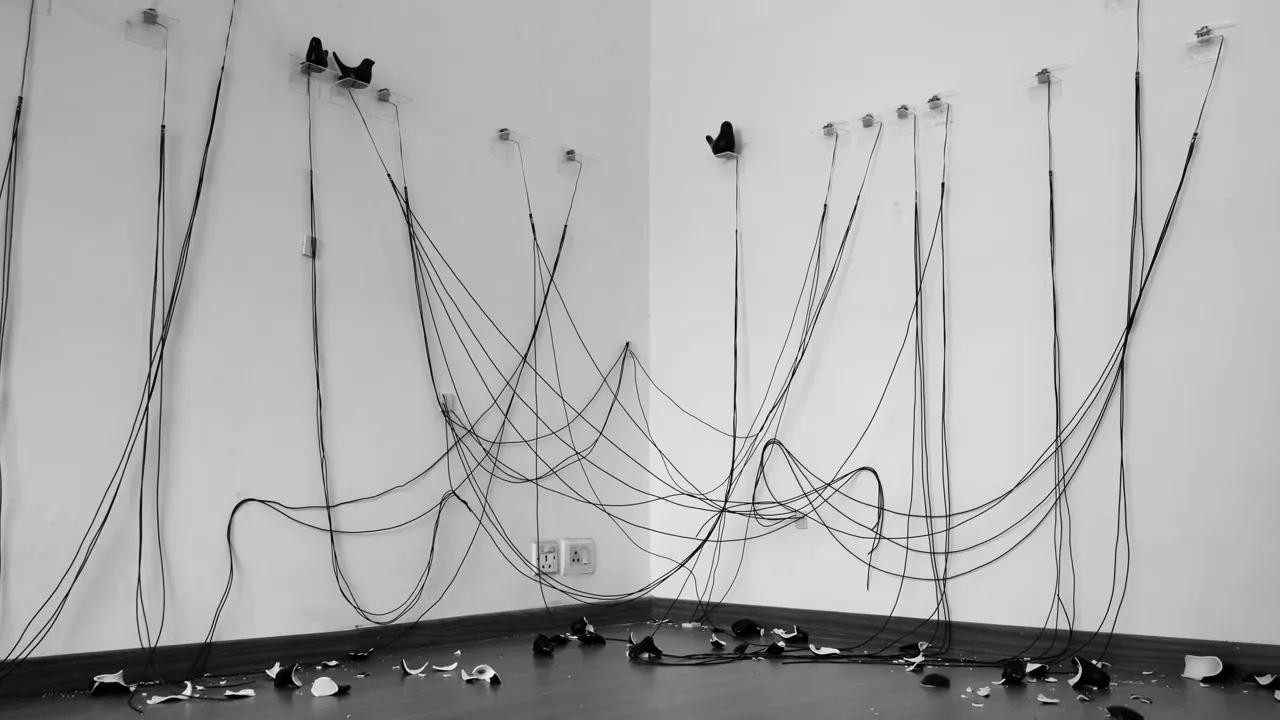
At the heart of “Fleeting Wings” are delicate ceramic bird silhouettes, meticulously crafted to capture the essence of avian grace and vulnerability.
These fragile sculptures are poised precariously on platforms throughout the installation space, their beauty and fragility in stark contrast to the mechanical apparatus that threatens their existence. This juxtaposition serves as a powerful representation of the tension between urban development and natural ecosystems.
The installation is designed to respond to human presence, with viewers unwittingly becoming active participants in the unfolding narrative of ecological destruction.
As visitors enter the space, their movement triggers a chain reaction. Proximity sensors detect human presence, activating motors that begin to strike at the ceramic birds. This mechanism makes tangible the often invisible impact of human activity on urban wildlife.
The interaction between viewer and installation is carefully calibrated to create a profound emotional and intellectual response. The longer a visitor remains in the space, witnessing the unfolding destruction, the more rapidly the birds fall from their perches.
Sonic Memoir (III/III)
The auditory component of “Sonic Memoir” is crucial to its impact and is designed to evolve as visitors move through the space. As viewers approach the installation, they are initially enveloped in a serene soundscape.
This audio environment is carefully crafted using found recordings of bird species from the Indian subcontinent that are classified as near threatened, vulnerable, or critically endangered.
The choice to use these specific recordings is significant – it allows visitors to experience the beauty of sounds that are becoming increasingly rare in urban environments, while also highlighting the precarious state of these species.
However, the serenity of this soundscape is short-lived. As visitors move deeper into the installation, or perhaps trigger specific sensors, the bird calls abruptly cease, plunging the space into an eerie silence.
This sudden transition from harmony to silence is jarring and intentionally unsettling. It serves as a metaphor for the abrupt way in which urban development can displace wildlife, and how quickly we can lose the natural sounds that enrich our environment.
The silence that follows is not a mere absence of sound, but a presence in itself - a tangible void that visitors can feel.
Conclusion
"Anatomy of Progress* (*regress)" is more than just an art installation; it is an argument for a new way of seeing and being in our cities.
By making the abstract concepts of ecological loss and the extinction of experience tangible, it challenges us to reconsider our relationship with the urban environment and the non-human lives we share it with.
The project serves as a powerful reminder that progress should not come at the cost of the natural symphony that once defined our shared spaces.
.