Knit+
Digital passport enabled
shared-fashion economy
Hogeschool van Amsterdam (HvA) | Amsterdam Fashion Institute (AMFI) Centre for Economic Transformation
2024-25
ROLE
UX Researcher & Interaction Designer
DURATION
Sept ‘24- Feb ‘25
LOCATION
Amsterdam, Netherlands
METHODS
Interviews, Behaviour Mapping, Field Visits, Prototyping,
Social Experiments
About the Project
KNIT+ begins with a familiar tension: people aspire to dress responsibly, yet fast-fashion habits remain the easiest choice. Research revealed that garments gain meaning when they carry stories, transparency, and the traces of previous wearers.
The platform reframes clothing as shared, evolving narratives. Through Digital Product Passports, effortless rental and repair, and Living Garment stories, each piece gains value with every wearer; turning circular fashion into a collective act of care, belonging, and continuity.
Dissecting the Ecosystem
From transaction to transformation
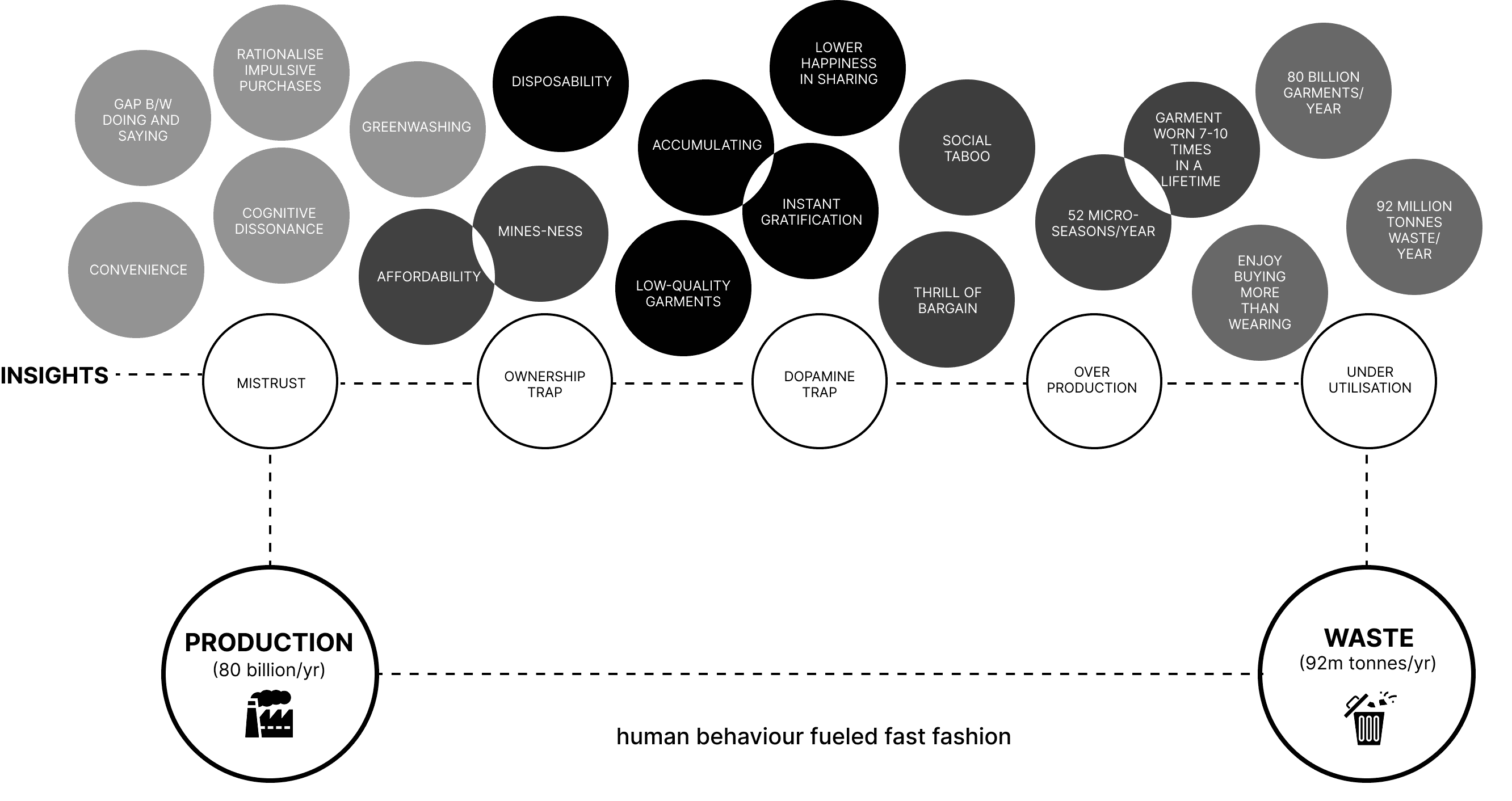
The fashion industry runs on an extractive, linear model that accelerates overproduction, fuels hyper-consumption, and sends 92 million tonnes of textiles to landfill every year.
Despite growing awareness, users remain caught between the dopamine rush of fast fashion and the guilt of unsustainable habits. Transparency is scarce, garment lifespans are short, and existing solutions often ask people to sacrifice convenience, style, or identity.
We tasked ourselves to understand the deeply unsustainable 'take-make-dispose' model and propose a new ecosystem for how we relate to our clothes.
How might we leverage a shared ownership business model to improve sustainable use and maintenance of fashion?
shifting behaviour(s):
buying to borrowing
tracking wear and usage patterns/ extending life of the garment (building a digital footprint of the garment)
Problem Statement
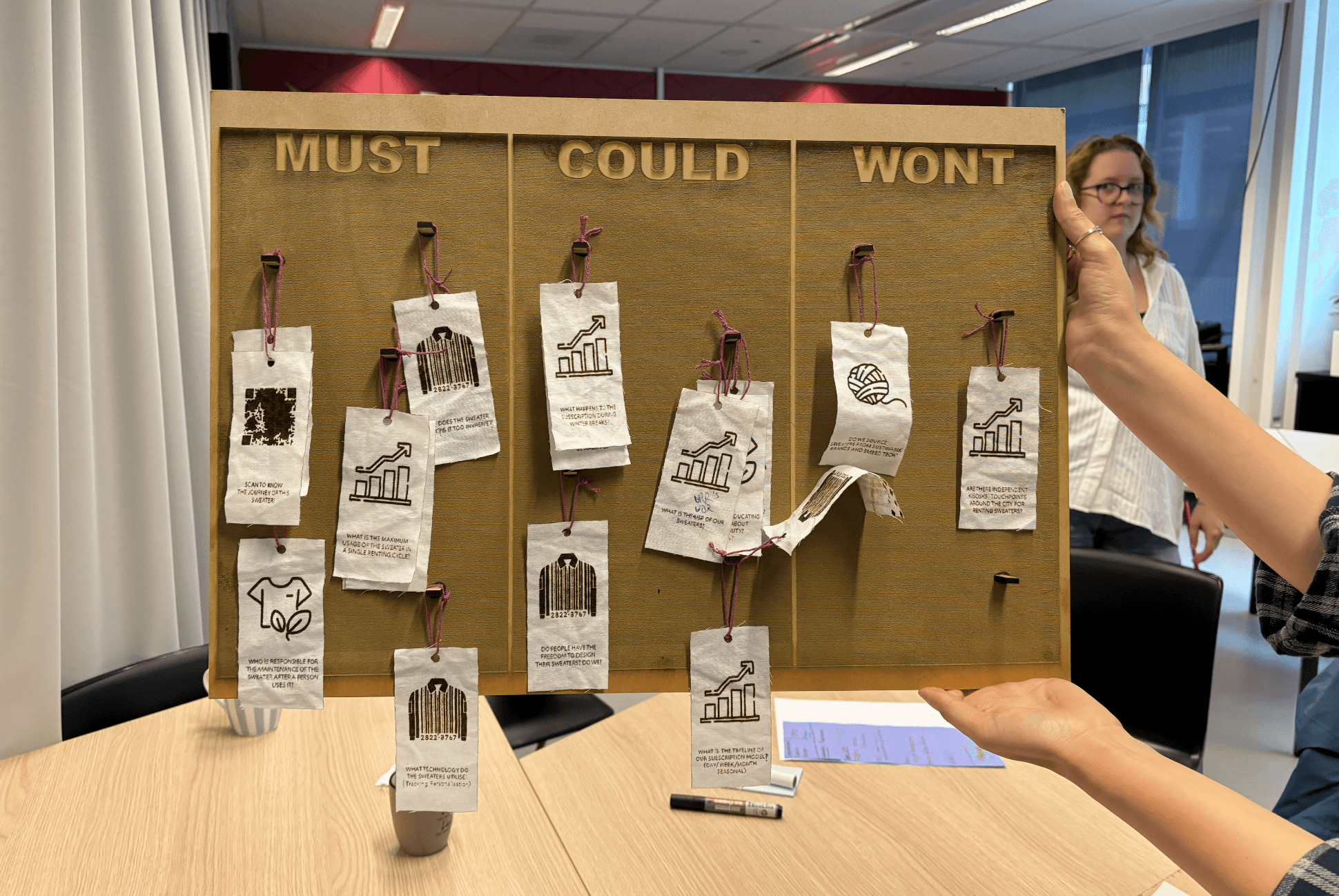
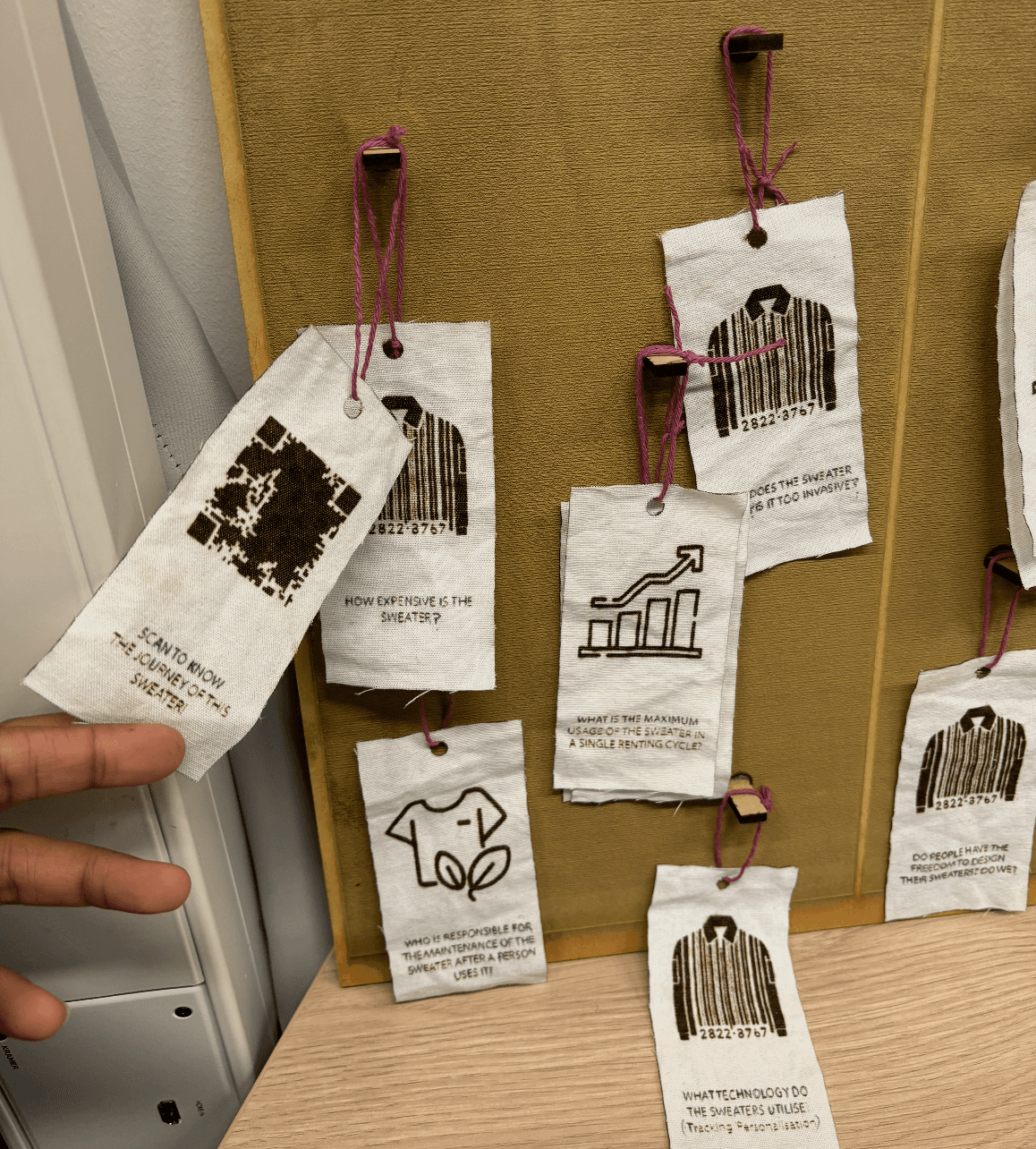
Using modified MoSCoW for clarity
Scope of the project
What must, could and wont be done during the given time of the project was learned through a conversational object to understand the needs of the stakeholders better.
Given the context of the project, we made clothing-tags as questions grouped into four categories, business, production, sustainability and sweaters (the product in question)
System at a breaking point
Fast fashion has optimized speed and scale at the cost of everything else.
Each garment represents 2,700 liters of water, chemical pollution, and poorly paid labor ; only to end up discarded after a few wears.
This “take-make-dispose” model drives environmental and social harm while encouraging psychological burnout through trend anxiety and closet overload.
Yet, systemic change is now inevitable.
KNIT+ responds to this systemic shift by leveraging Digital Product Passport (DPP) technology to design not just a product or platform — but a new behavioral ecosystem.
The Behavioural Challenge
Following were the recognised/chosen pressure points extracted from the design process which led to the proposed solution:
Fashion is as much about identity as it is about fabric.
Online culture has amplified certain psychological traps:
Instant Gratification & FOMO: Fast fashion exploits dopamine-driven impulses — the thrill of something new, cheap, and shareable.
The Conscious Consumer Paradox: Users want to act sustainably but face barriers — cost, convenience, and mistrust in green claims.
Core Tension: Most users are not driven by virtue, but by variety, affordability, and self-expression.
To compete, knit+ must meet these motivations — not preach against them.
The challenge was to make sustainability desirable and circularity rewarding.
Learning by Engaging
To build a holistic view of the modern consumer's relationship with clothing, we investigated everything from purchase psychology to disposal habits. To uncover deep, actionable insights beyond what users simply say, we focused on two core methods: data mapping to synthesise behavioral patterns and social experiments to reveal the true motivations behind their choices.
To ensure our insights were directly applicable, we narrowed our research to focus specifically on sweaters. This strategic decision aligned with our core product at knit+, a premium, high-quality sweater and allowed for a much deeper and more targeted investigation into user behavior.
KNIT+
The Mandate for Transparency (Digital Product Passports)
Rise of the Sharing & Circular Economy
A cultural shift from ownership to access, fueling growth in resale and rental markets
Two major global forces reshaping the industry
The EU’s 2027 regulation requires brands to embed lifecycle data in every product, catalyzing accountability.
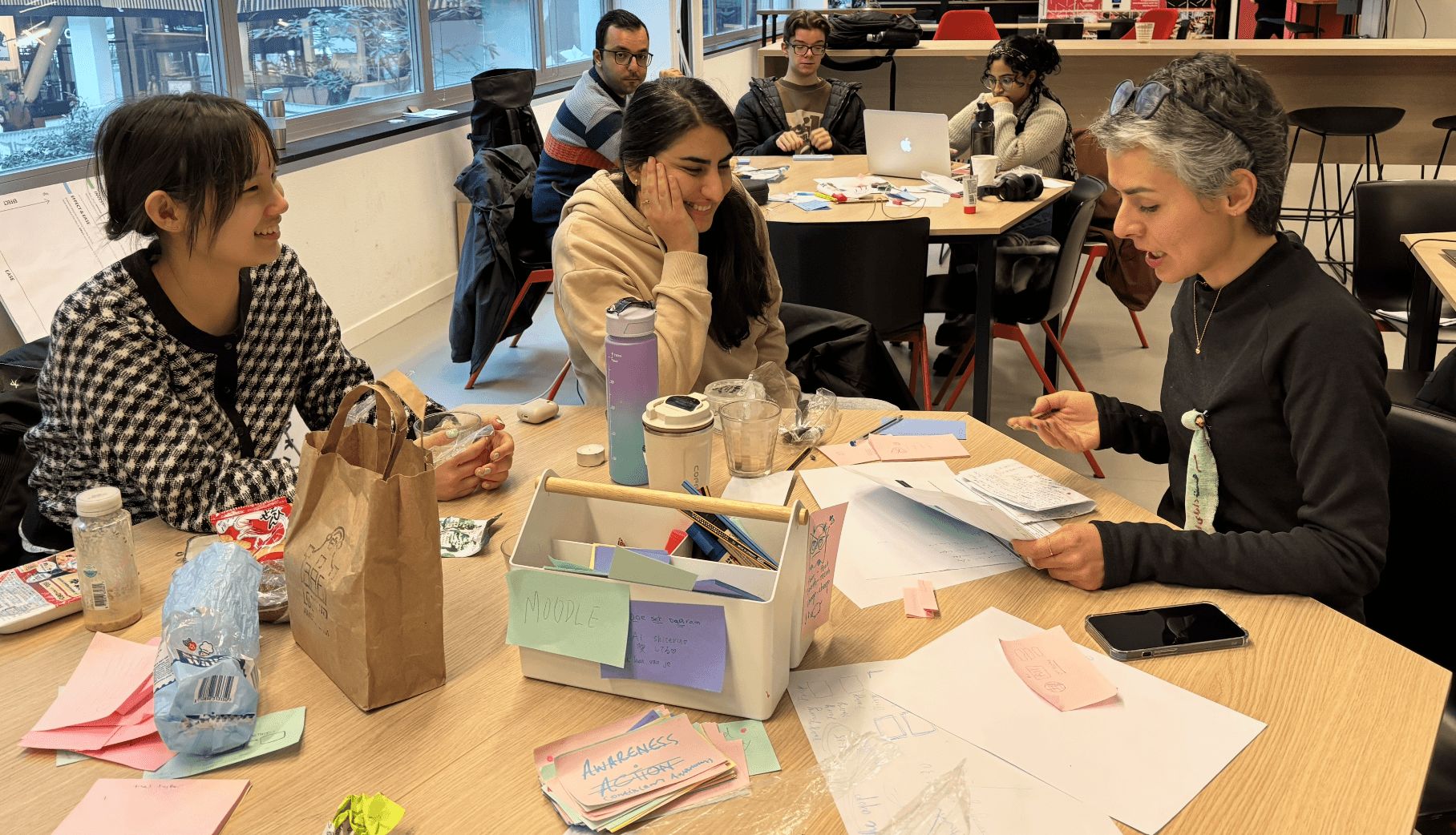
interviews understanding the drivers behind purchase and disposal of clothing
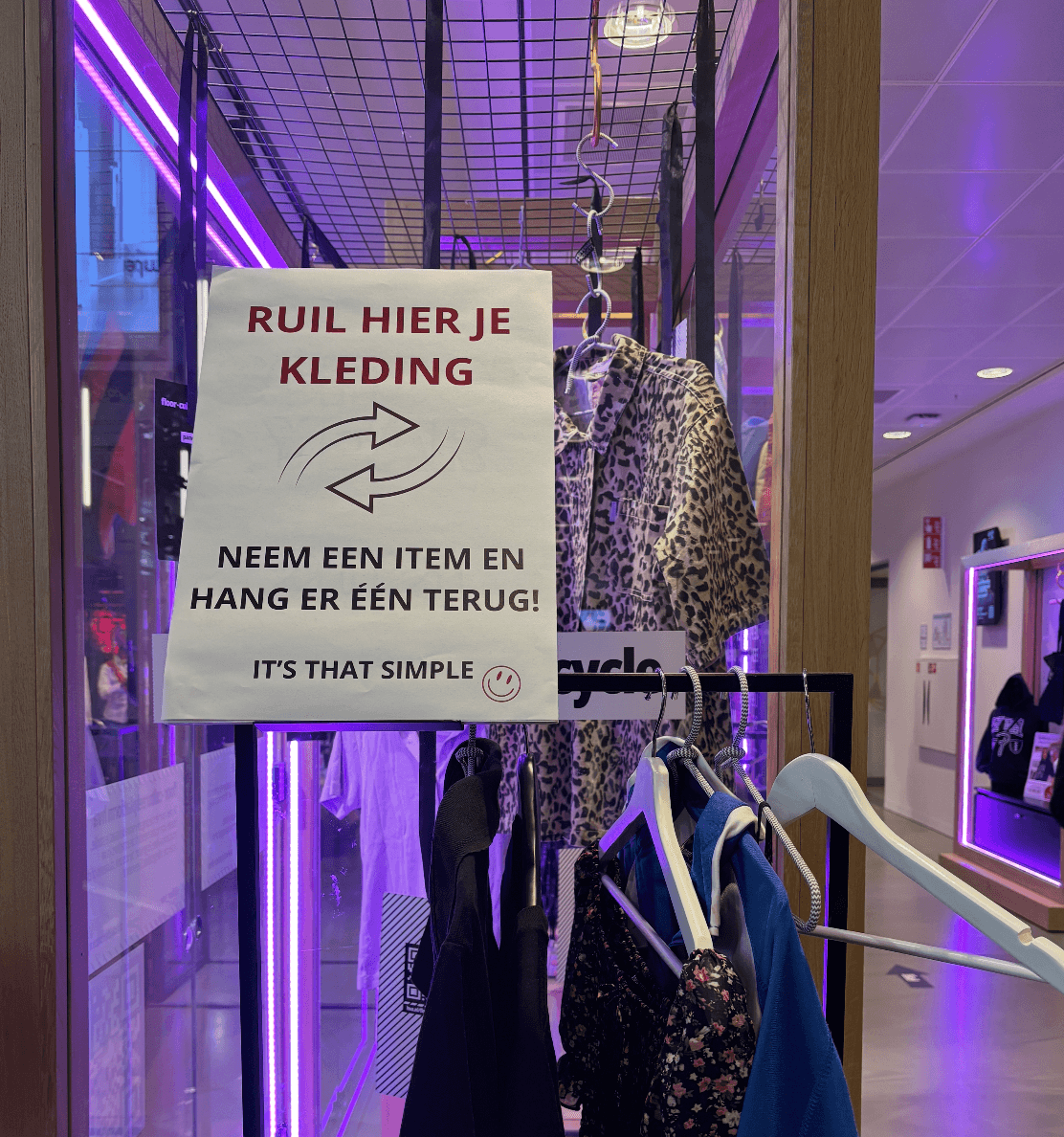
field visits clothing swap at the HvA university
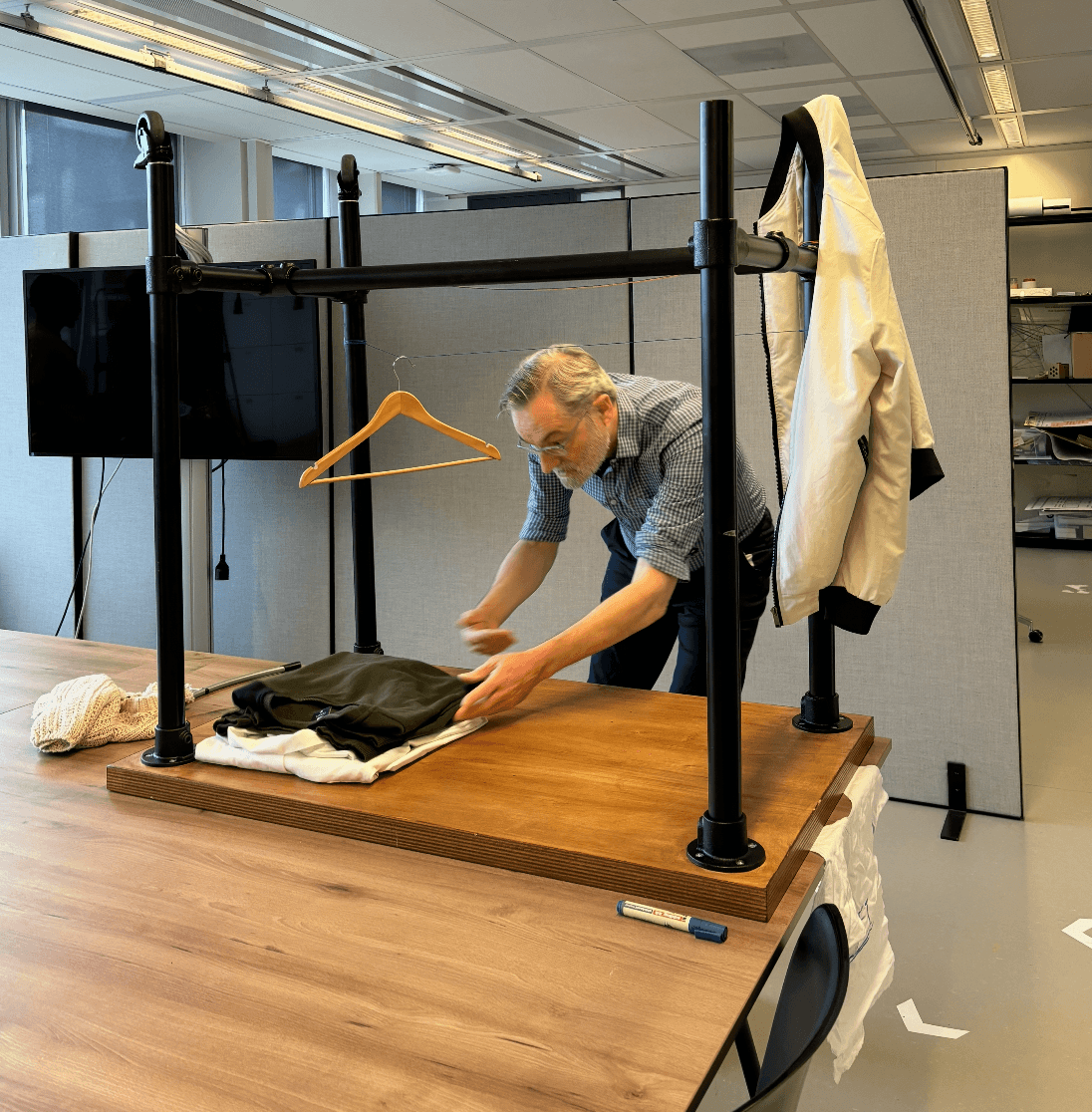
experiment "how people take care of their clothing"
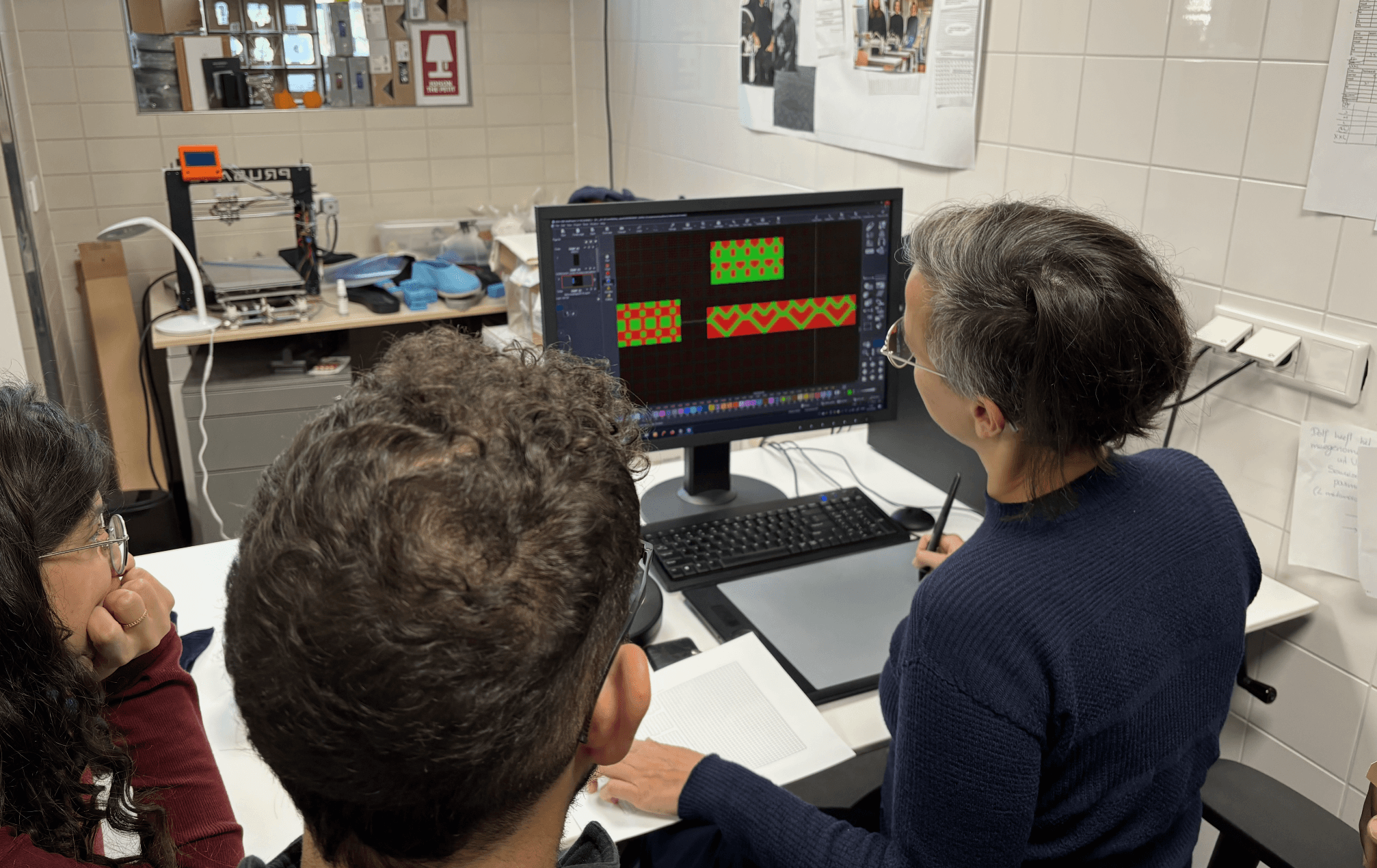
knitting machine team visit to understand the product and making/materials
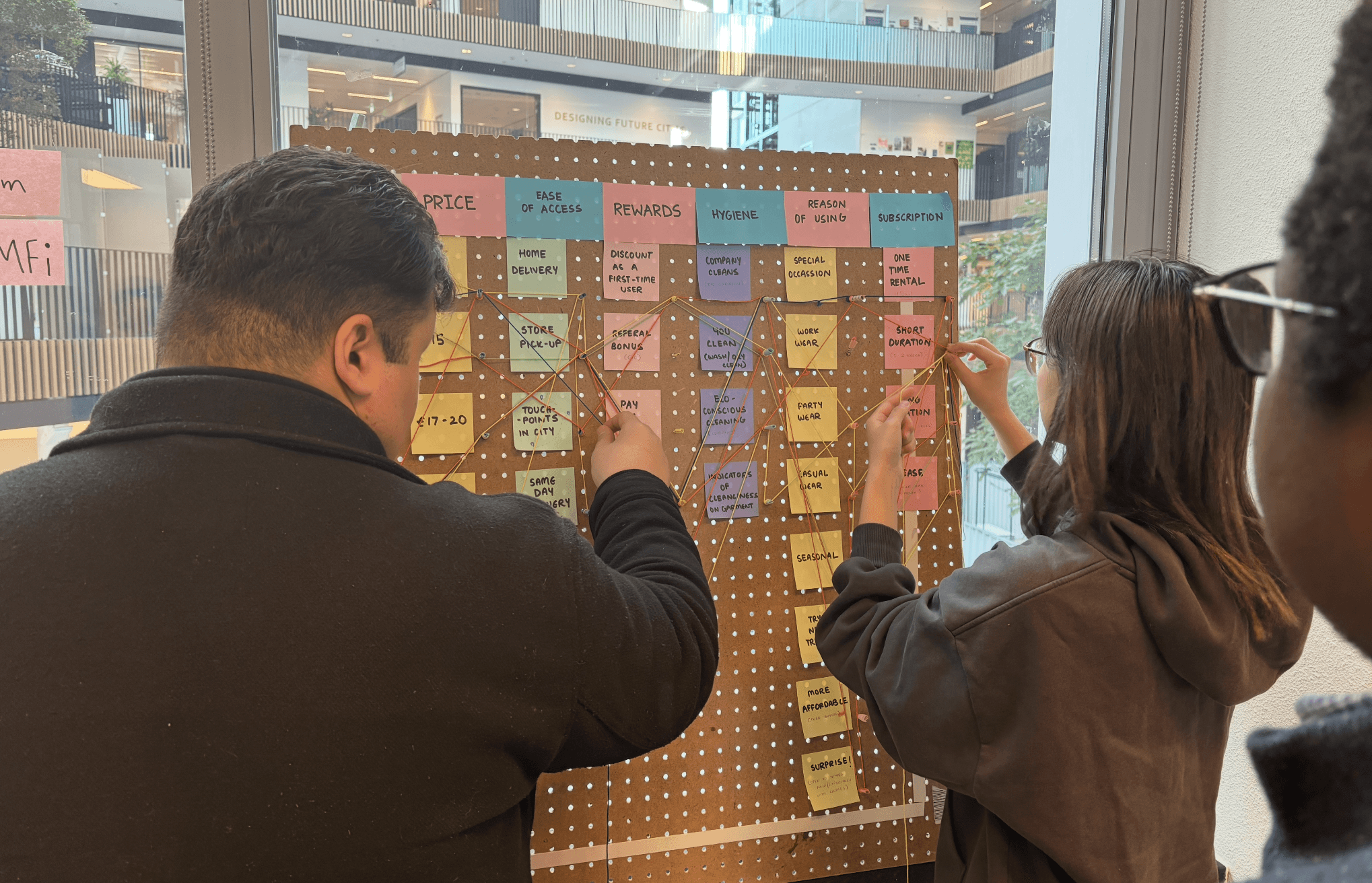
data mapping what makes renting more enticing to customers
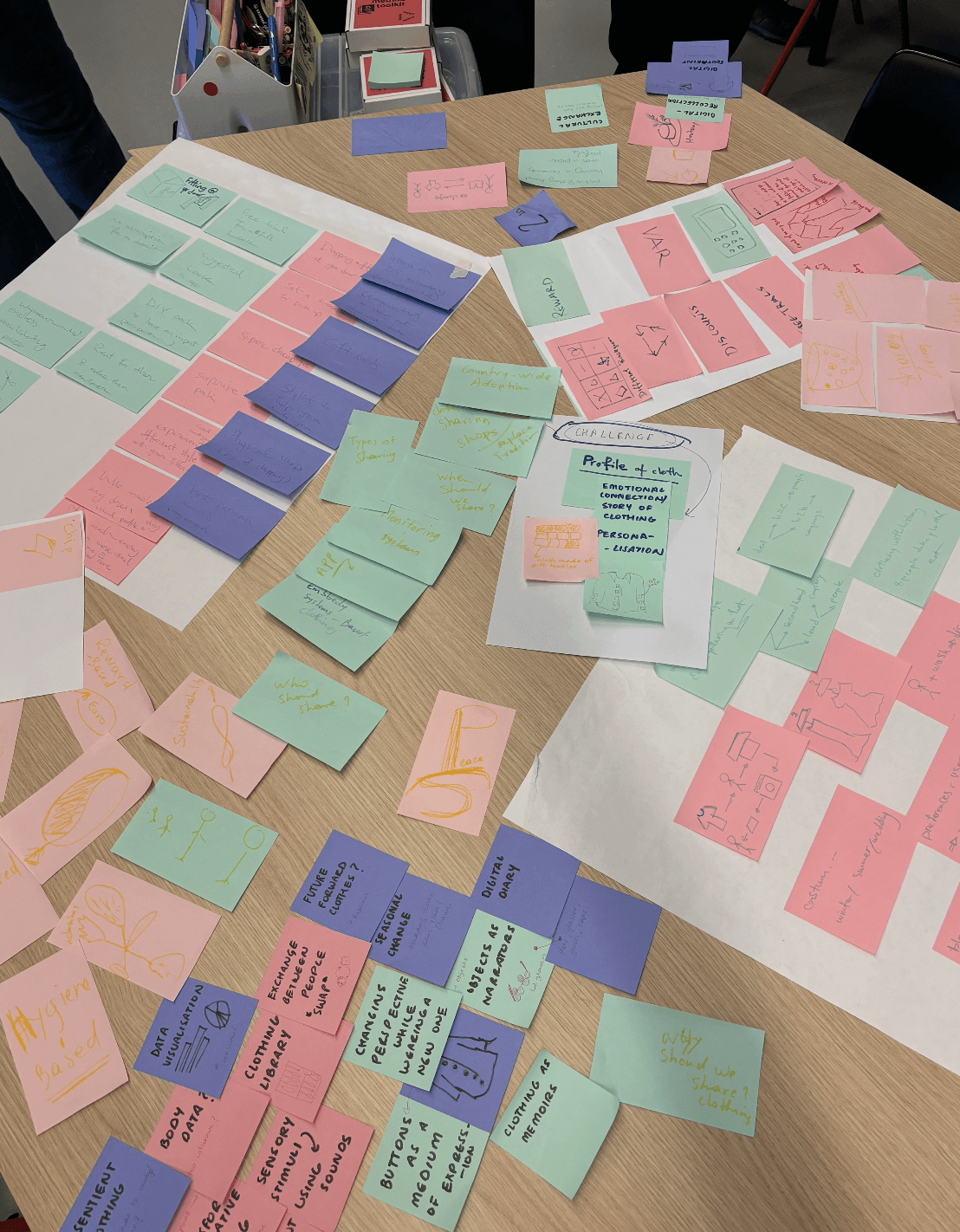
brainstorming possible areas of intervention
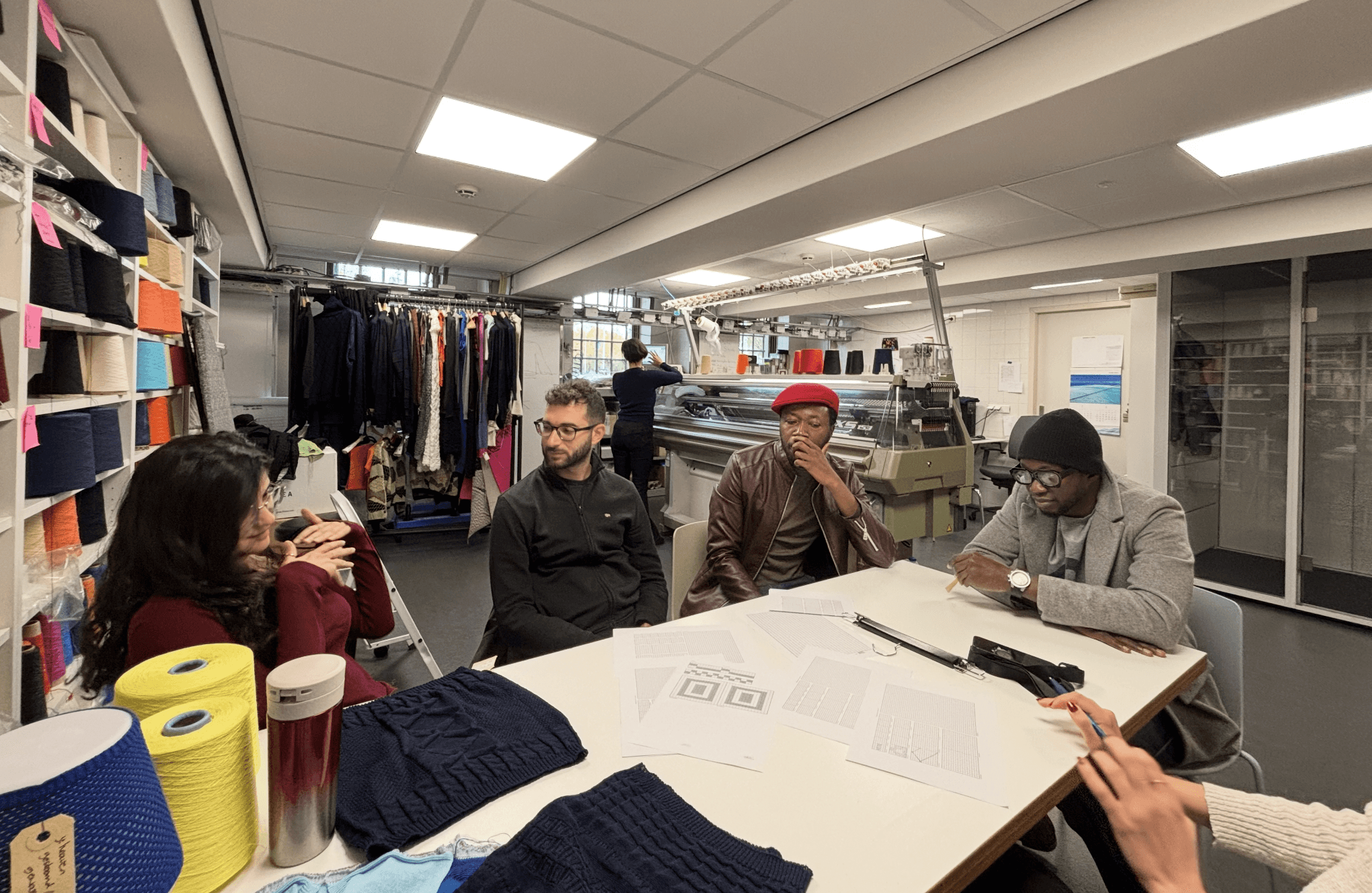
*Project currently in development — details are selectively disclosed.
Designing for Behaviour Change
Ethical Nudge Architecture
knit+ uses behavioral design to make sustainable actions the default, not the effort.
Default Nudges: Pre-owned items appear first. Slow, low-carbon shipping is pre-selected.
Social Proof Nudges: “5,000 users have rented this item, extending its life by 2 years.”
Framing Nudges: “Access this $500 sweater and save 500 liters of water.”
Feedback Nudges: Personal dashboards quantify impact — water saved, CO₂ avoided, garments shared.
These micro-interactions quietly rewire the user’s reward system — from the thrill of ownership to the satisfaction of contribution.
The Living Garment: Story as Value
At the heart of knit+ lies its most human innovation The Living Garment.
Each item carries a blockchain-verified, evolving record of every user who has worn it. This narrative transforms wear-and-tear into heritage.
Garment Journey Map: An interactive DPP timeline showing a piece’s travel across people and places.
User-Contributed Stories: Every user adds a “chapter” - a memory, event, or styling tip.
Social Proof of Longevity: The most storied garments are celebrated and featured — gamifying durability as a new status symbol.
This feature cleverly harnesses the Endowment Effect - even a rented item feels “partly mine” because the user leaves a trace of themselves within it.
Emotional connection becomes the new currency of fashion.
Knit+
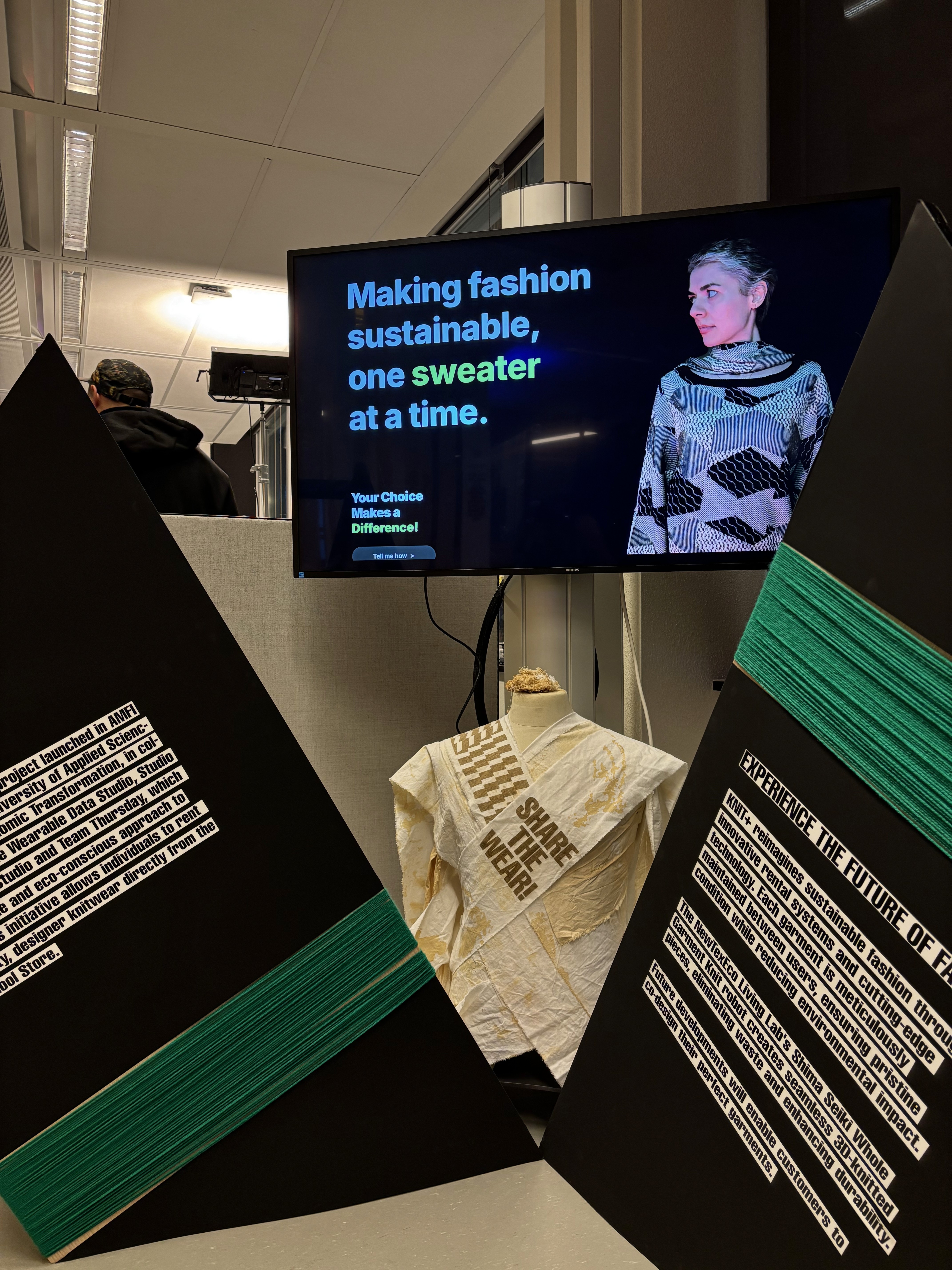
making fashion sustainable one sweater at a time
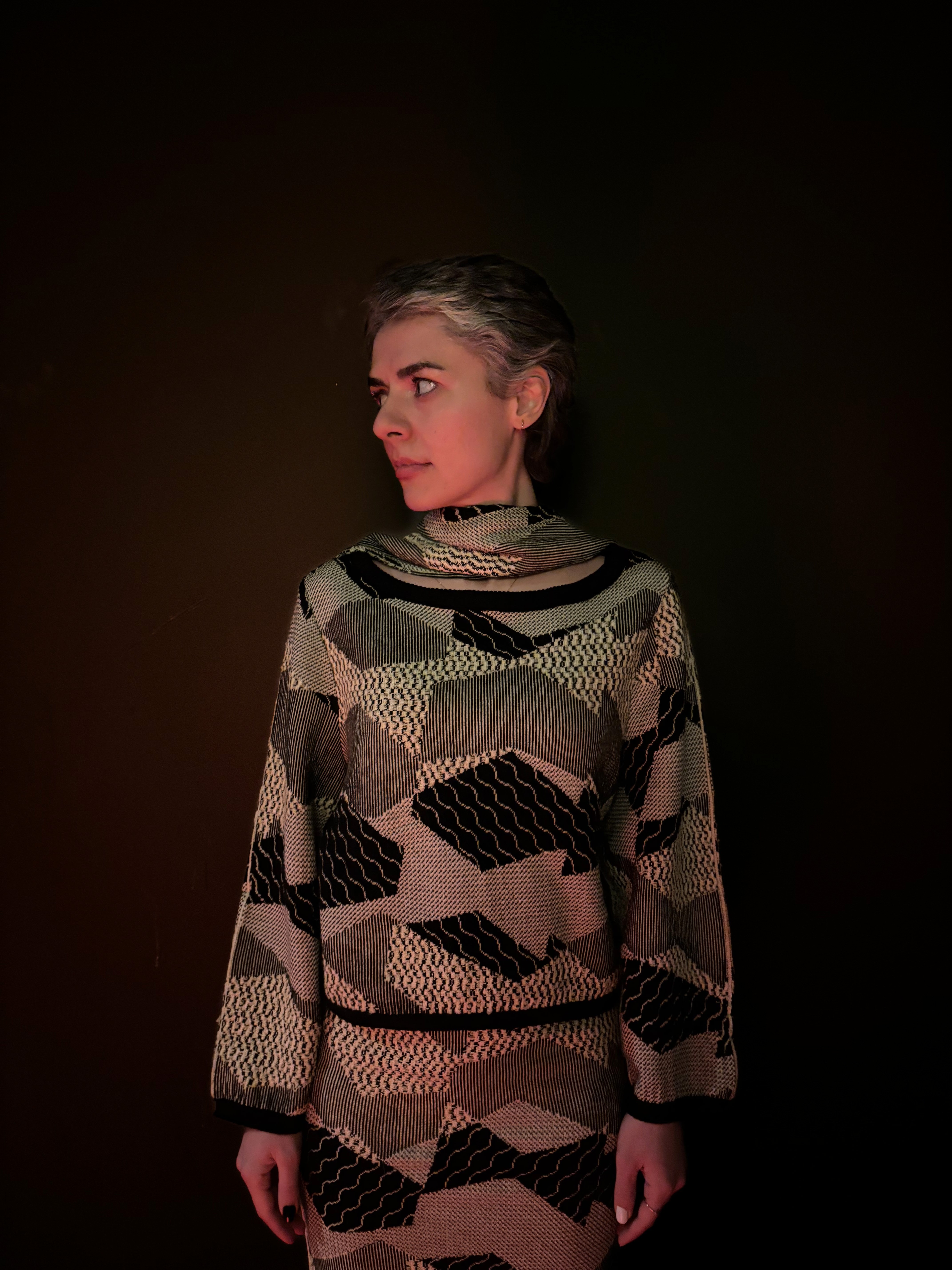
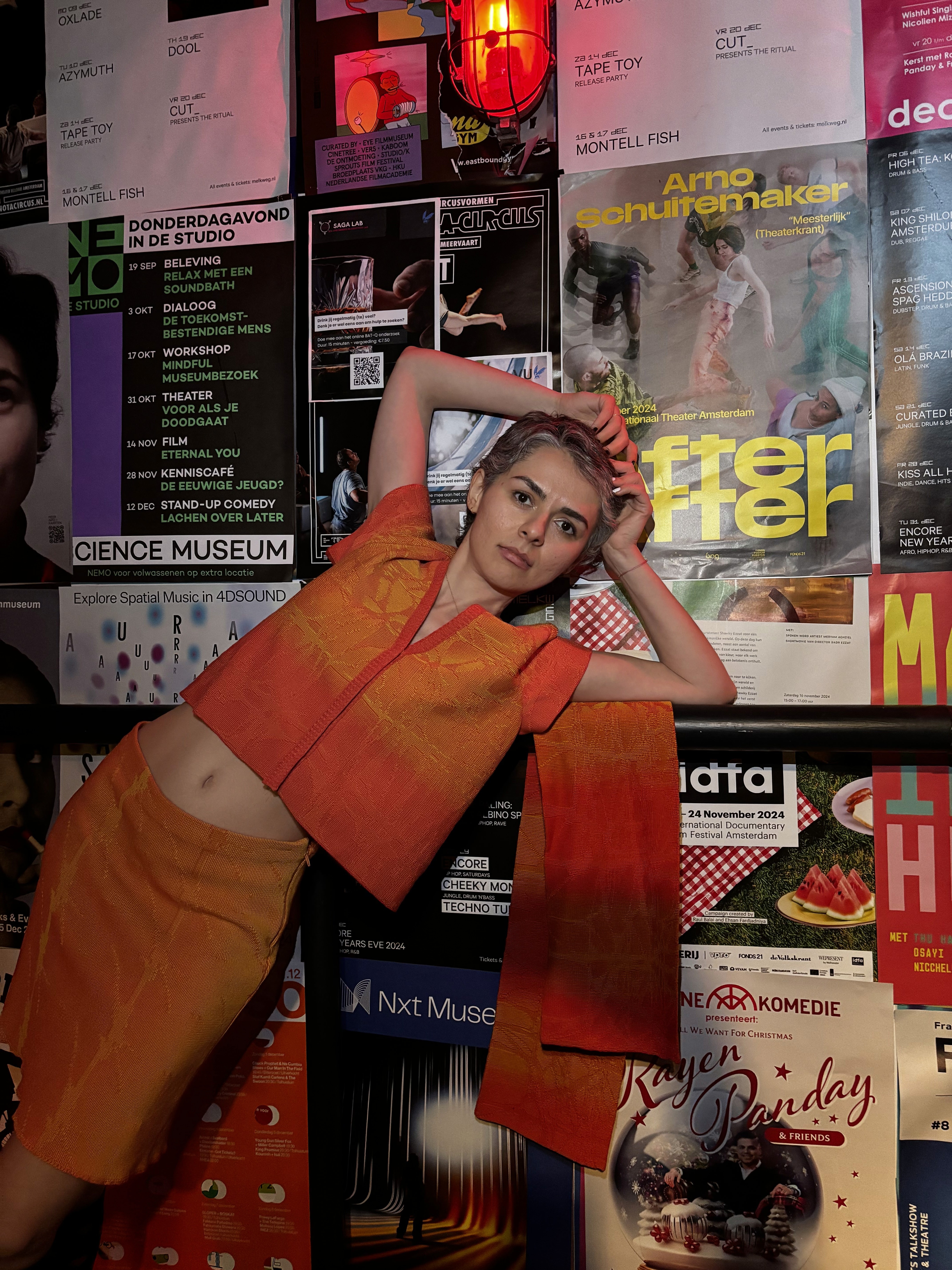
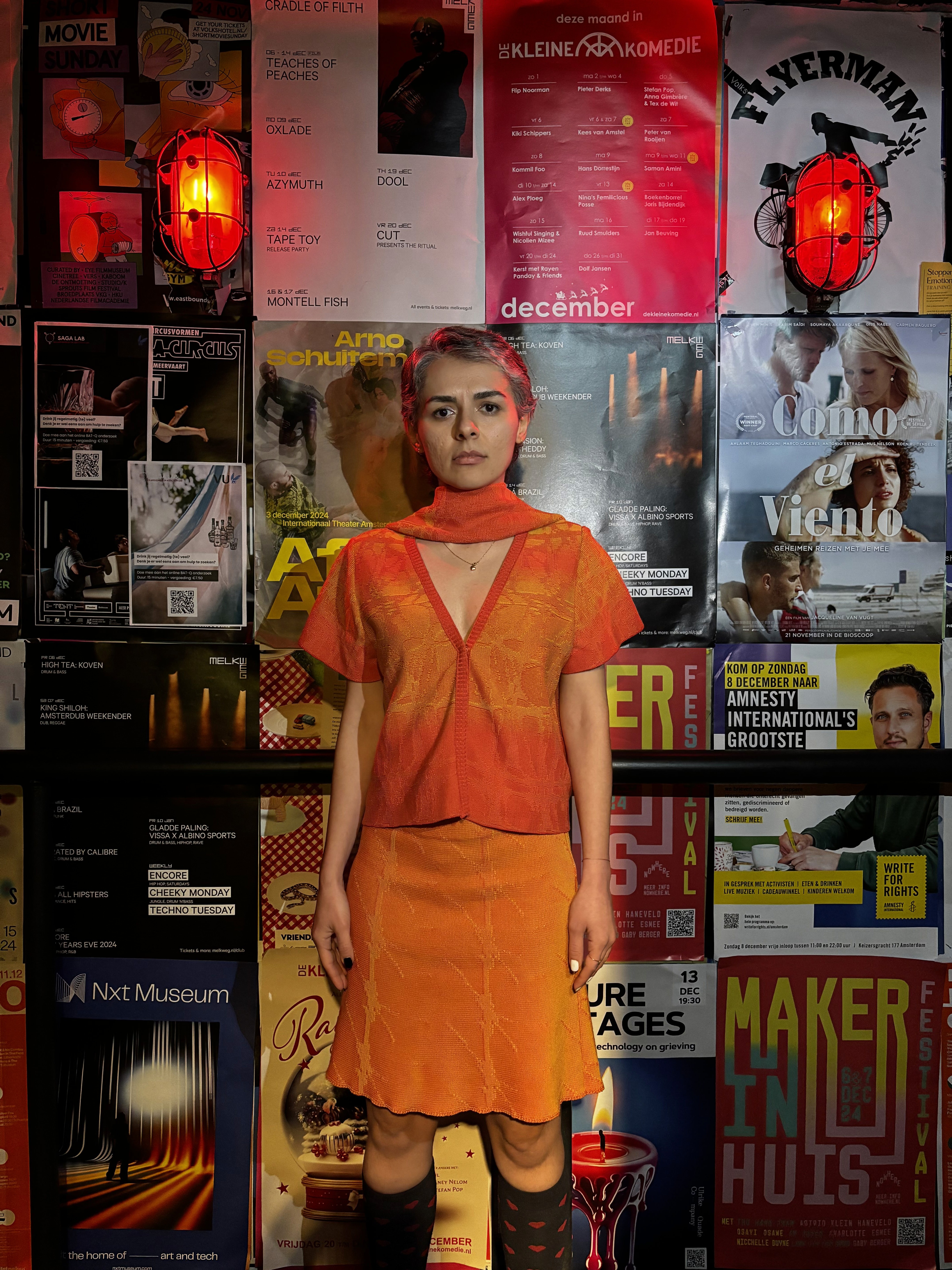
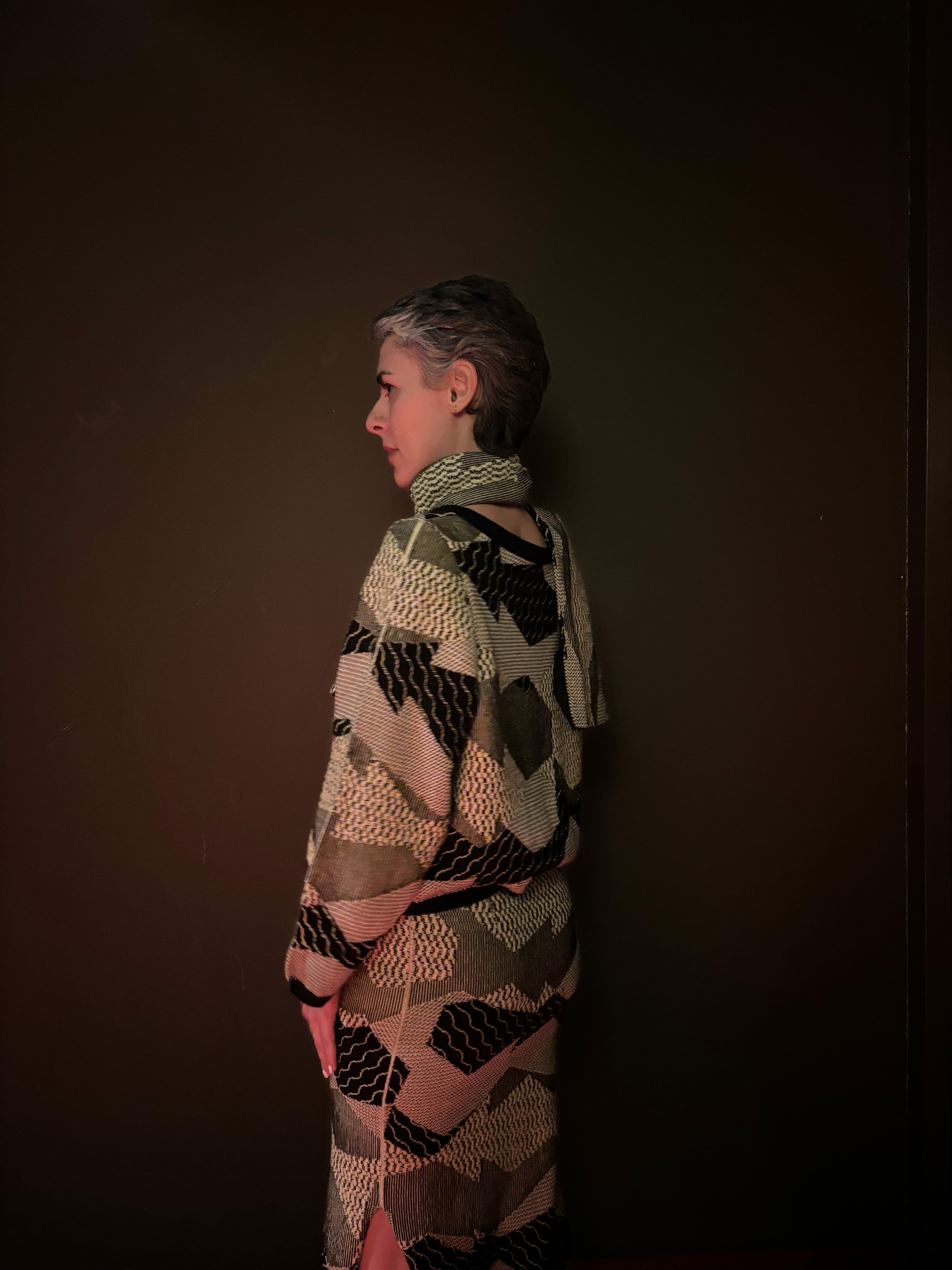
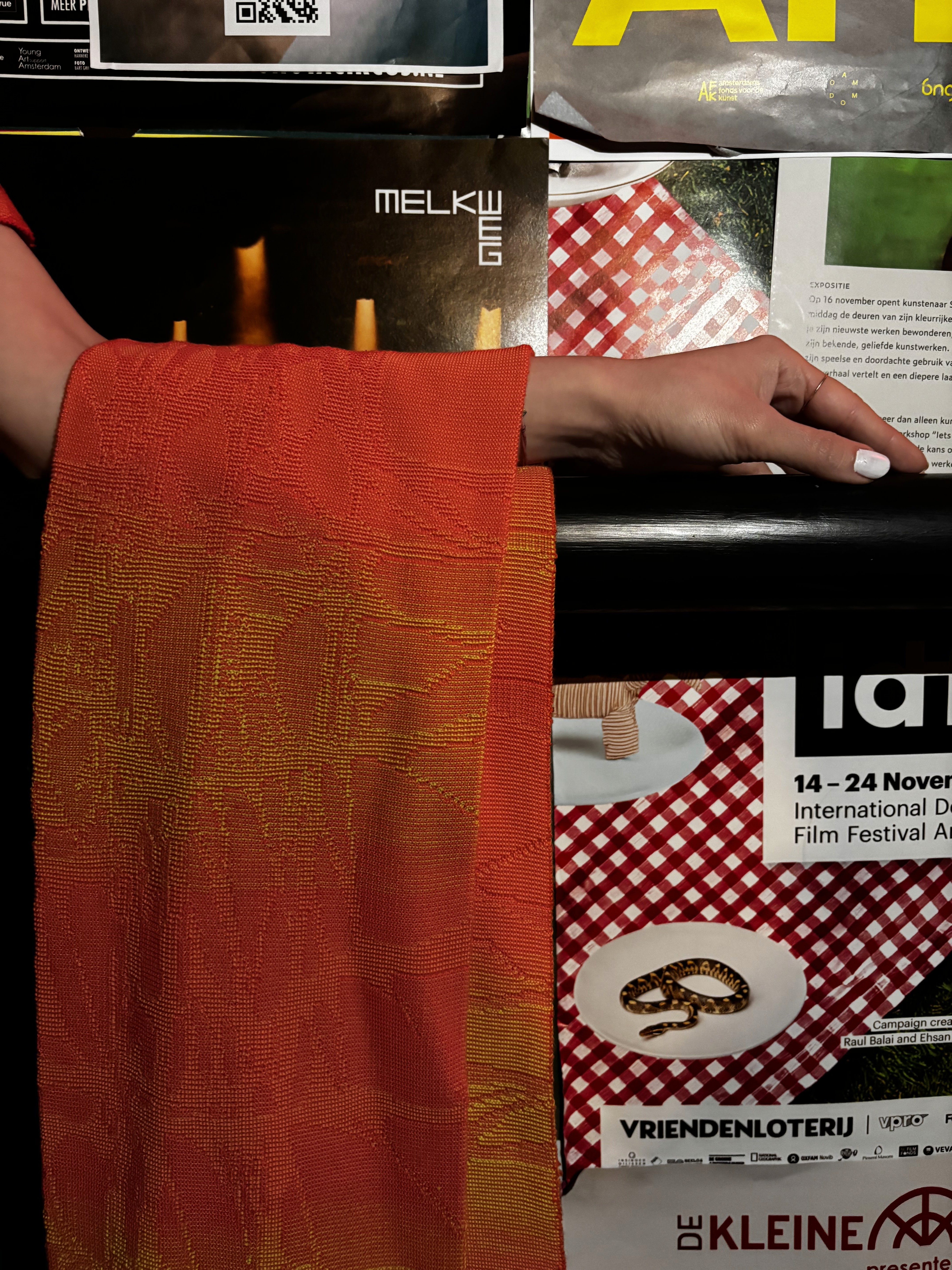
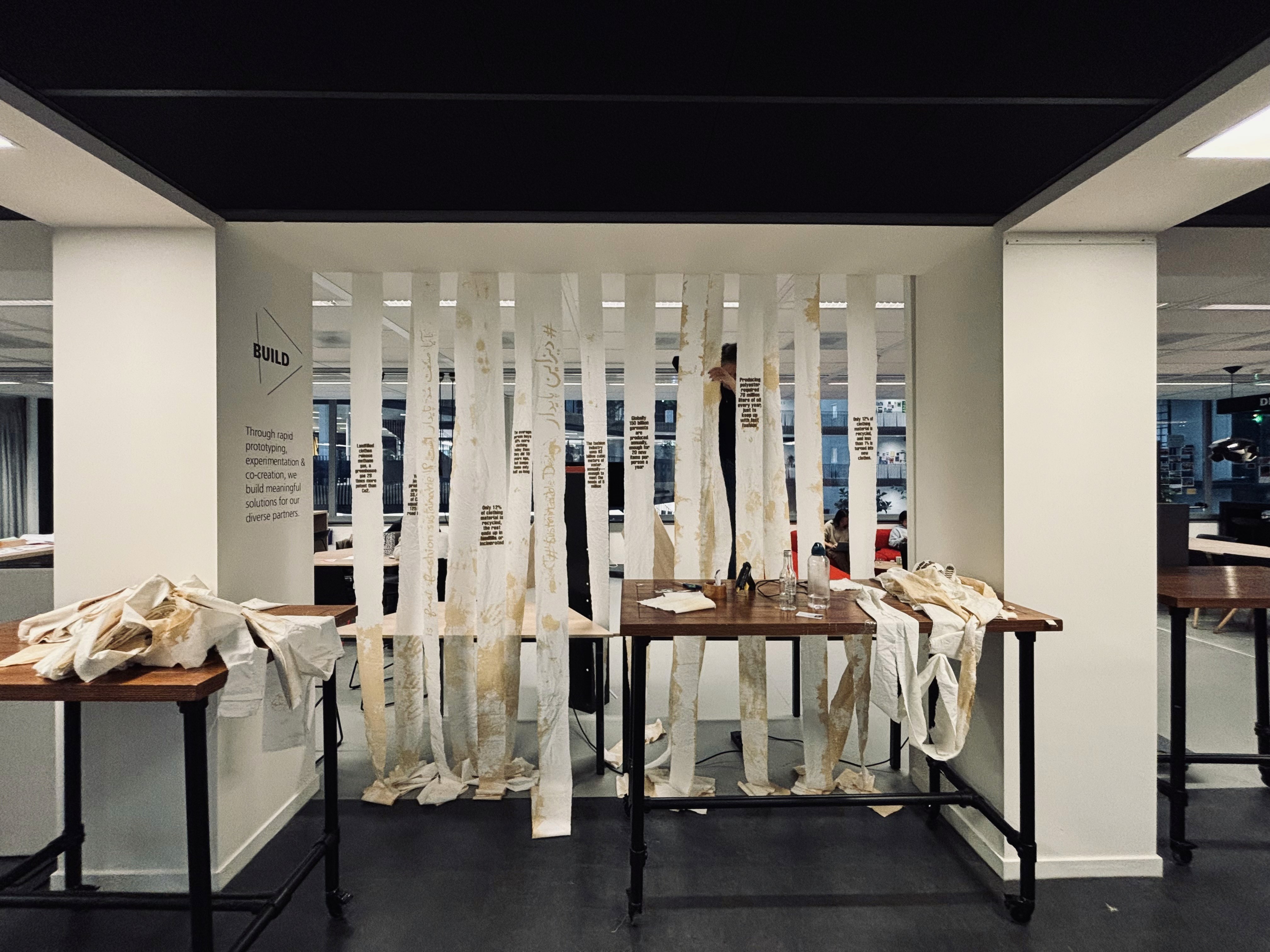
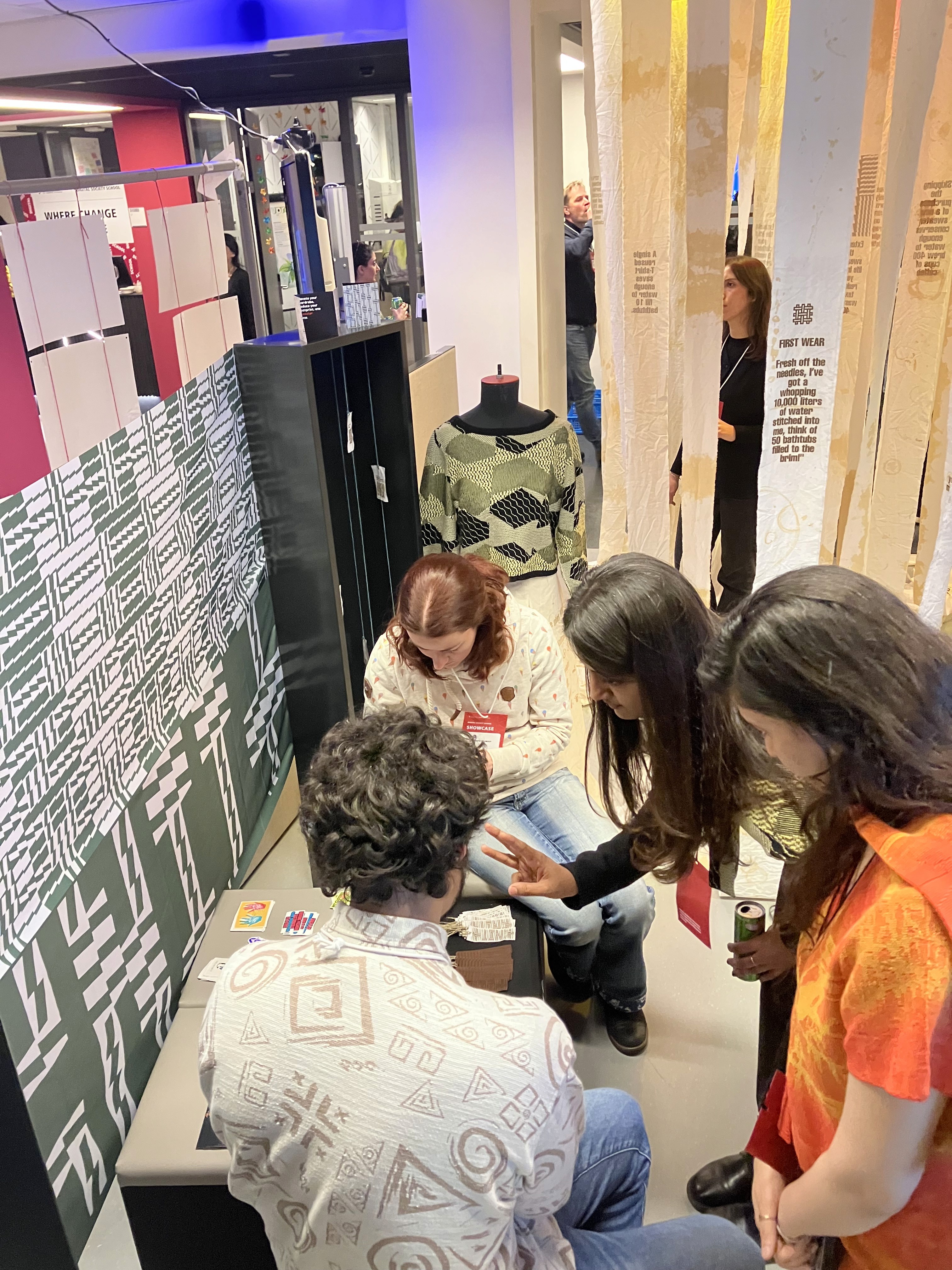
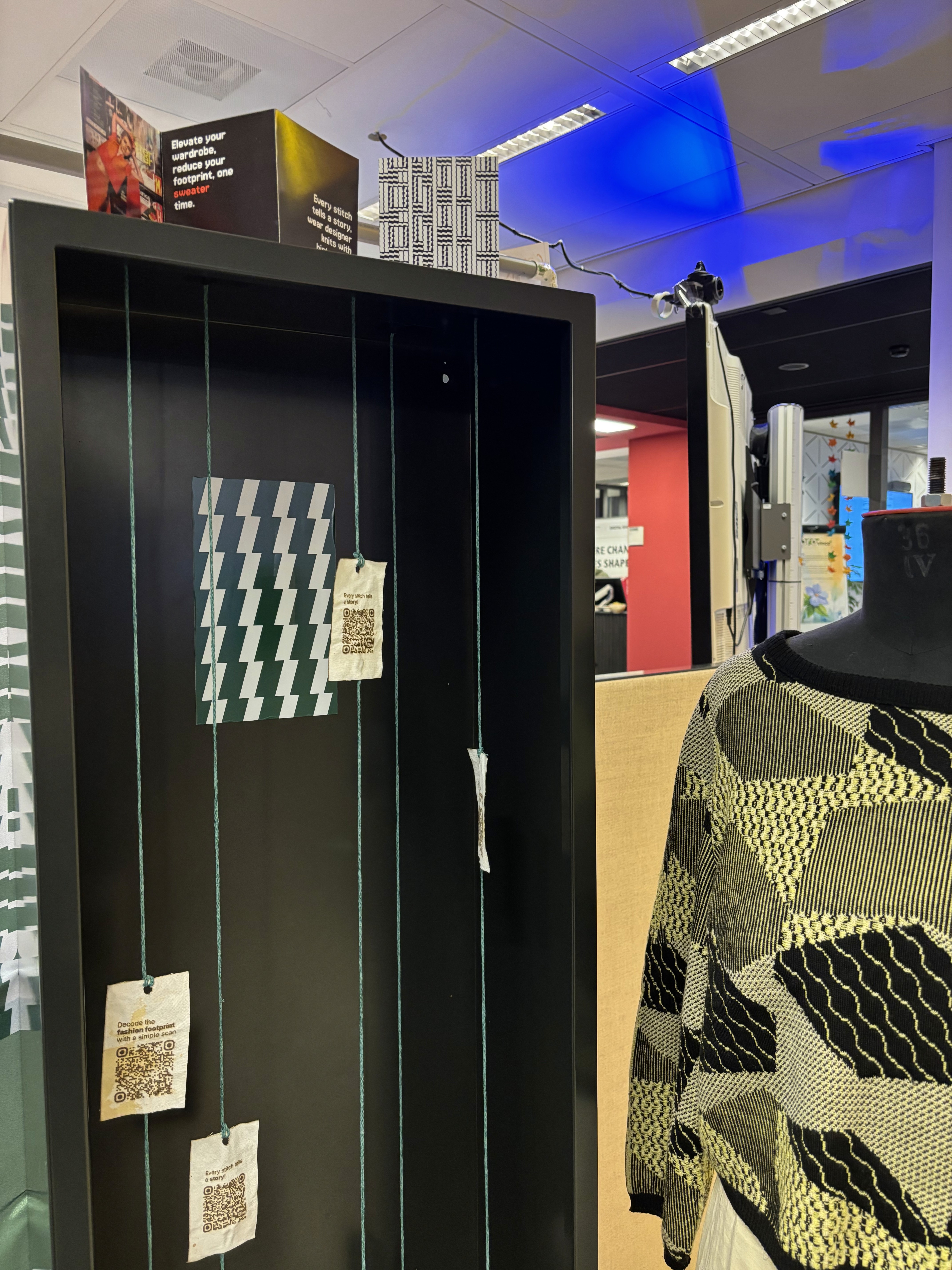
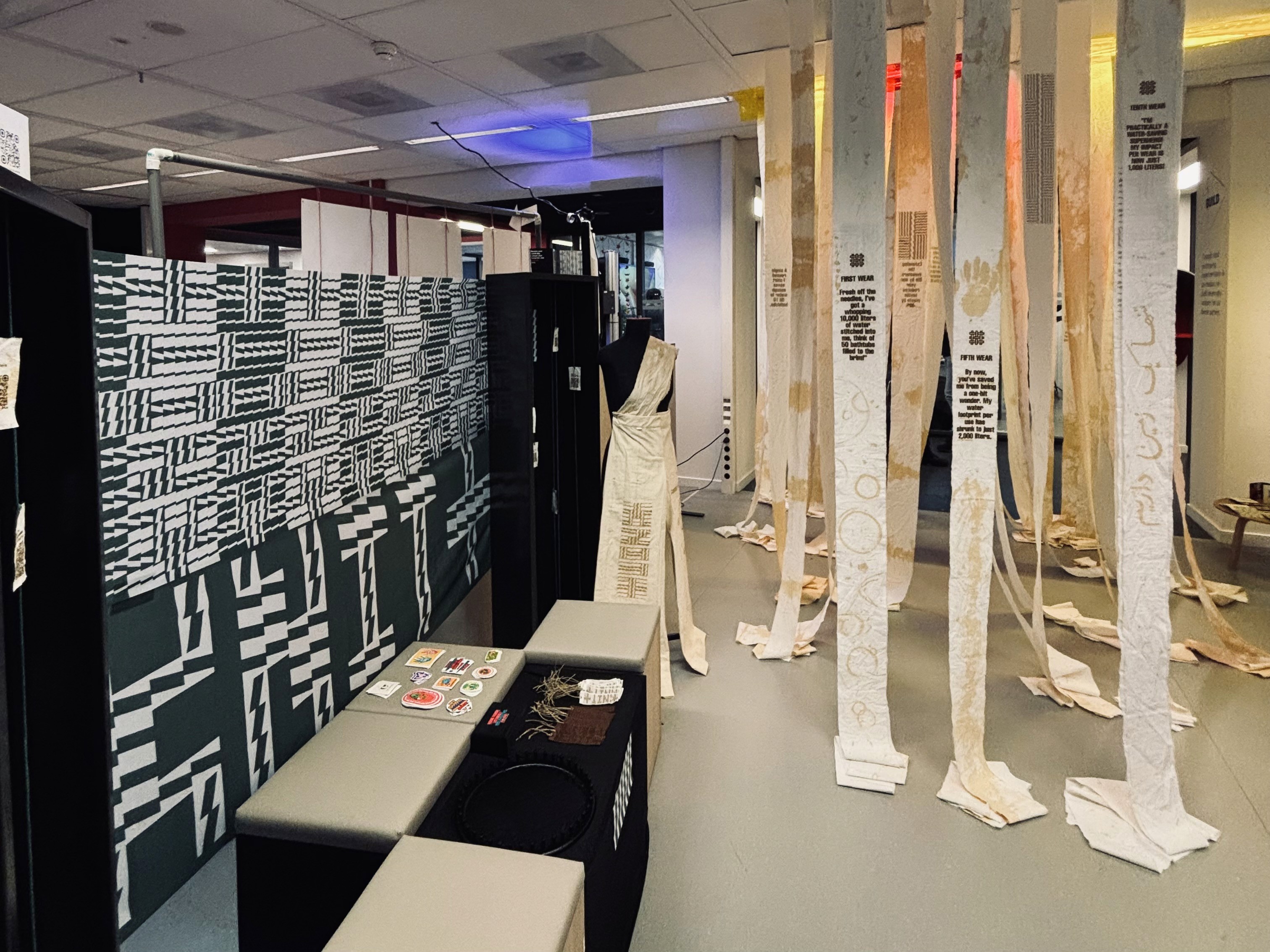
We built this project slowly and with intent — starting with research and fieldwork, moving through design, knitting, and photographing, and ultimately bringing it to life as a physical exhibition at HvA University, a showcase that attracts designers from across the country.
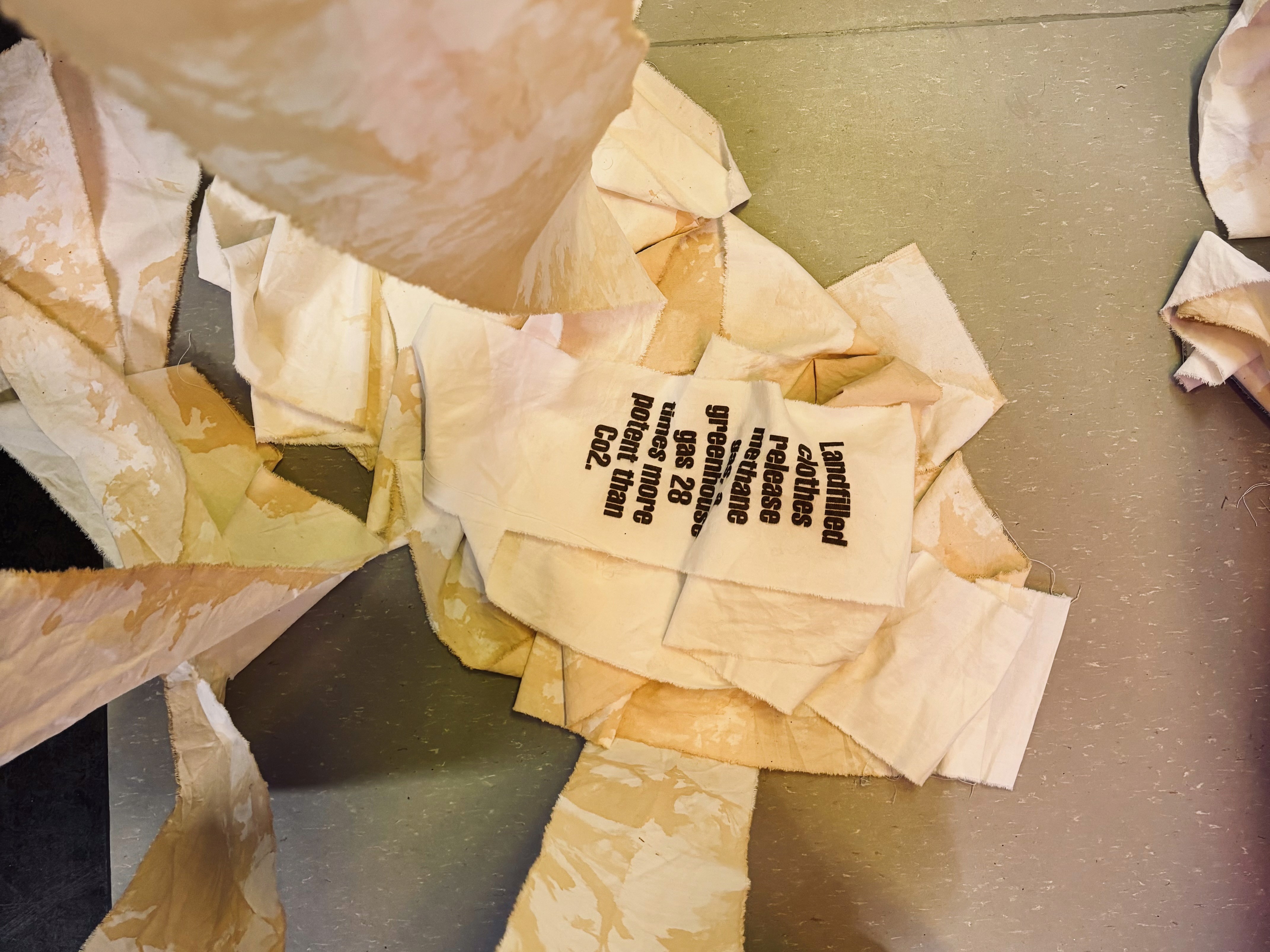
The final display became a natural extension of the project’s values, translating sustainability from concept into something people could see, touch, and experience. Built entirely from reclaimed waste materials sourced across the university, the installation featured repurposed garments layered to form the structure, with fashion and sustainability facts laser-cut directly into the fabric to create quiet moments of discovery and awareness. To make the experience more inviting and human, we also created a small interactive game, encouraging visitors to sit, engage, and spend time reflecting on the impact of fashion in an approachable, memorable way.

Digital Product Passport
Standardised digital record about the product, including its origin, materials, sustainability, and compliance, throughout its lifecycle
Impact
Each metric is quantified into real-world equivalents to make sustainability tangible and easy to understand.
Showcase at Hogeschool Van Amsterdam
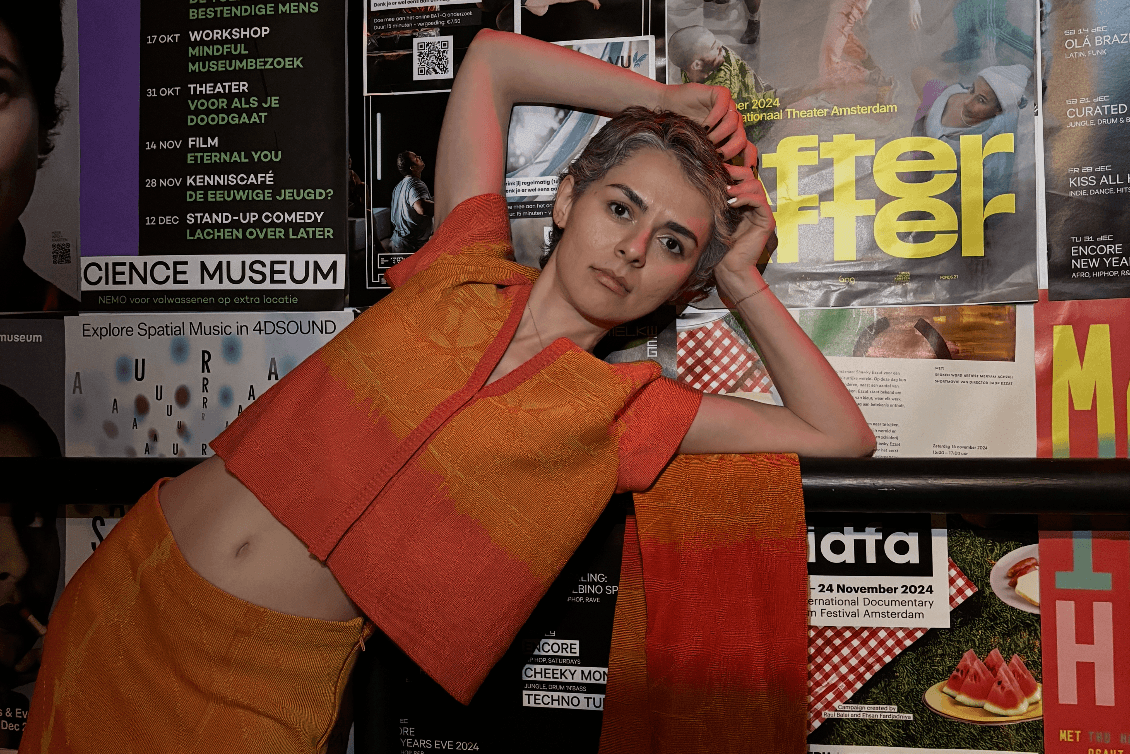
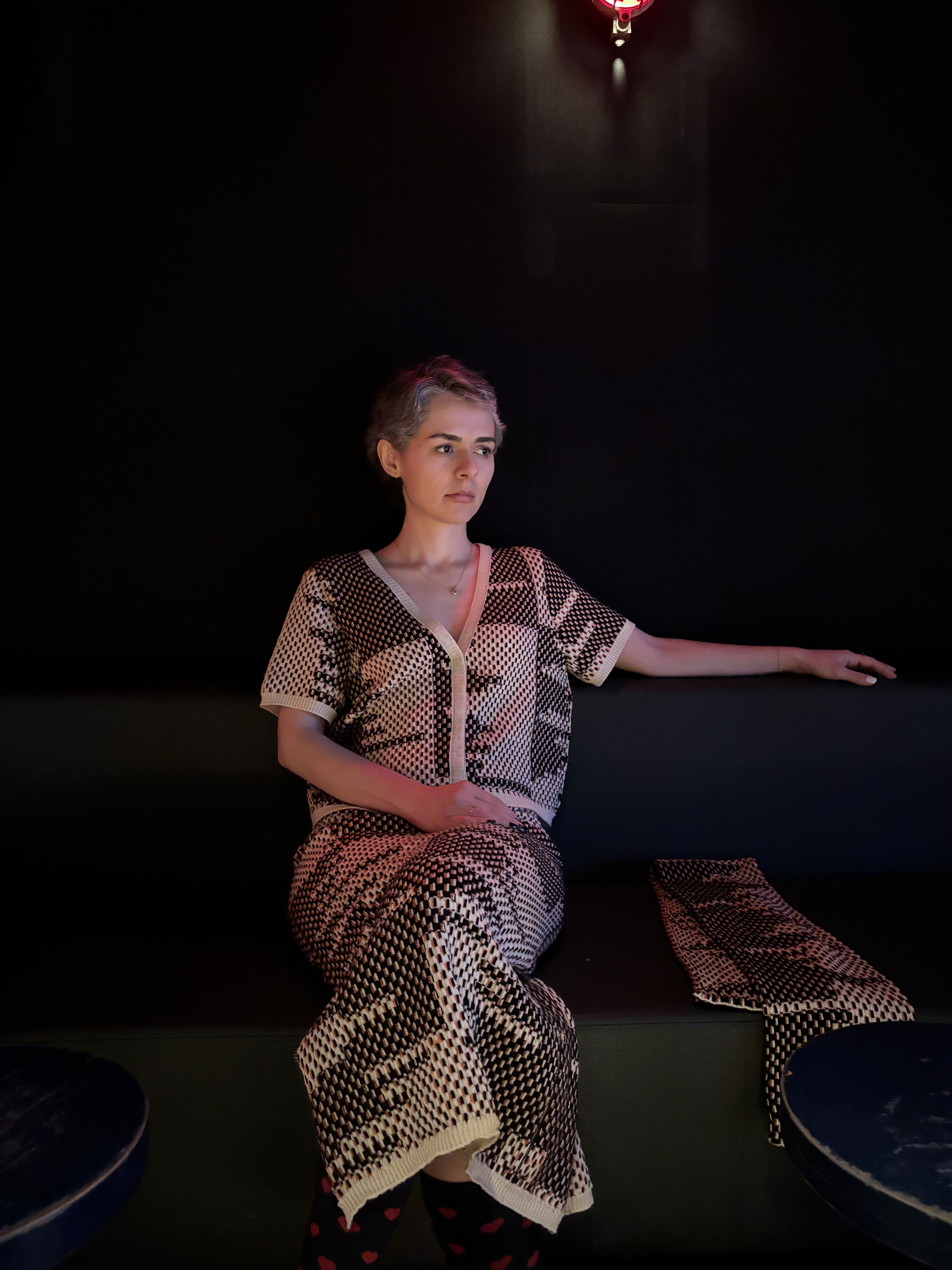
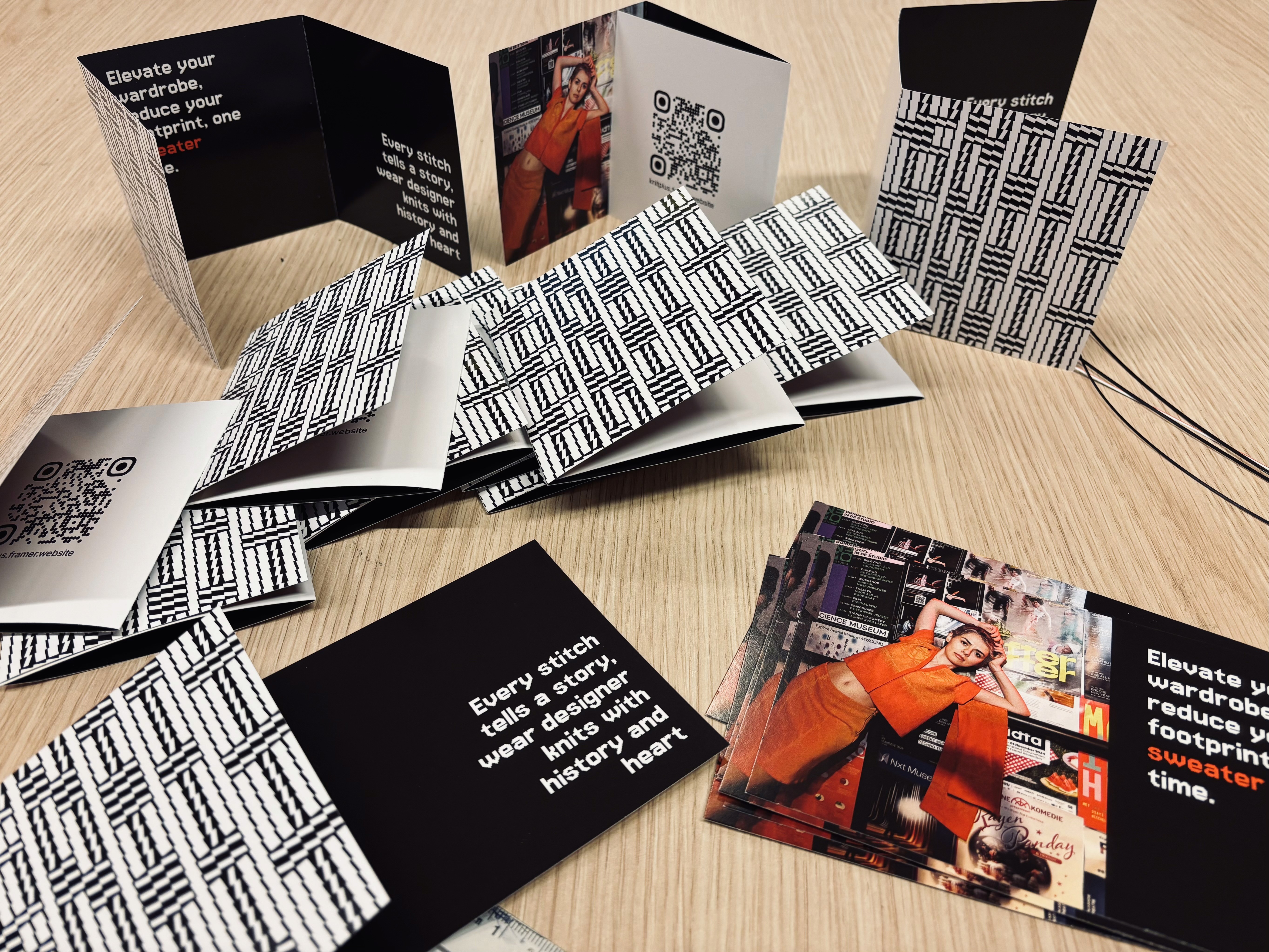
Photoshoot for the garments
Prototypes - Webshop/Digital Product Passport
Webshop Iteration
Website prototype with logo animation